Celliara comparison
Braun Silk Expert Pro 5 vs Tria Hair Removal Laser 4X
An IPL that sets its own flash power against a cordless diode laser. What separates them is less the result each claims than how much skin each covers, and how fast.
Our answer
For most buyers, the Braun Silk Expert Pro 5.
If your hair and skin sit on Braun's chart, it covers the areas most people treat, legs, underarm, bikini and upper lip, in about ten minutes once a week, with flash power that adjusts itself and two heads in the box.
Choose the Tria 4X instead if you specifically want a diode laser for smaller zones such as underarms, the bikini line or the upper lip, prefer a cordless handset, and are an adult with Fitzpatrick I–IV skin and naturally light-brown to black hair. Its small window makes legs slow.
See the differences that decide it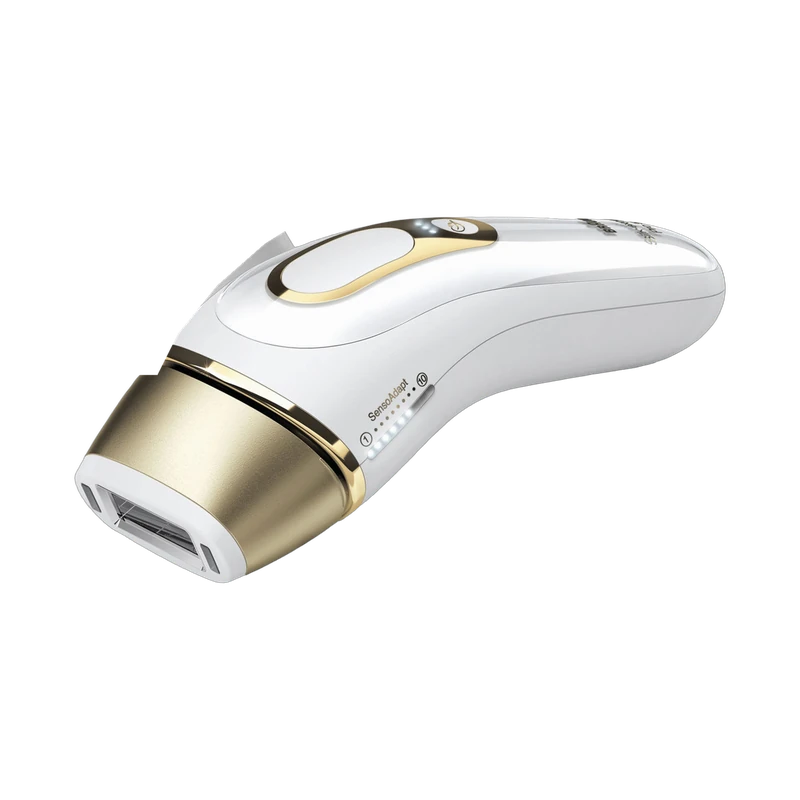
Our default pick
Braun Silk Expert Pro 5
Choose it for coverage: flash power that adjusts itself, two heads and about ten minutes a week for its listed areas.
8.9/10
$419.00
- Store
- Braun on Amazon
- Returns
- Amazon return terms
- Checkout
- Amazon ↗
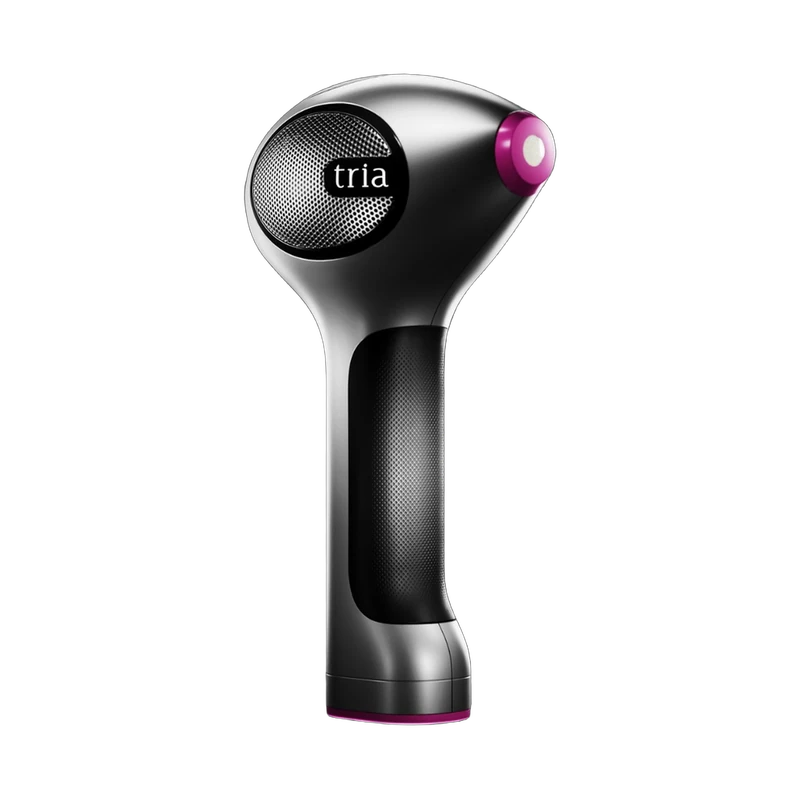
For laser work on smaller zones
Tria Hair Removal Laser 4X
Choose it for a diode laser on smaller zones, in a handset with no cord, if your skin and hair fit its limits.
8.3/10
$449.00
- Store
- Tria Beauty on Amazon
- Warranty
- 1-year warranty against manufacturing faults, honoured by The Beauty Tech Group
- Returns
- Amazon return terms
- Checkout
- Amazon ↗
Decide on these
The four differences that decide it
Each one can change which device you should buy. Read the product facts side by side, then what they mean for you.
How much skin a session covers
BraunBraun states about ten minutes once a week for legs, underarm, bikini and upper lip, flashing as often as every 0.5 seconds, with a standard cap for larger areas.
Tria 4XA small treatment window placed stamp by stamp. Tria states about 30 minutes of treatment per full charge, which its rough guide puts at about half a leg.
What this means for you
If legs are on your list, this is the difference you will feel every session: one gets through them in minutes, the other in patient sittings with charging breaks. Speed is not a result, but a routine you keep is what makes either one work.
Who this favours The Braun, for covering larger areas quickly.
IPL or diode laser
BraunBroadband IPL. SensoAdapt reads your skin tone as you go and sets flash power for you, with ten levels and three modes.
Tria 4XA single-wavelength 810 nm diode laser. You step its output within 7–20 J/cm² yourself, once a skin sensor has unlocked it.
What this means for you
This is a choice of technology and control, not of proven results: Celliara's evidence record holds no study comparing the two. Choose the laser if a laser is what you want; choose the IPL if you would rather not pick an intensity for each area.
Who this favours Your preference: automatic IPL, or a laser you set yourself.
Where each is built to work
BraunBraun lists legs, arms, underarms, the intimate area, fingers, toes and, for women, the face below the cheekbones, with a face precision head for smaller zones.
Tria 4XA small, precise spot suited to underarms, the bikini line and fine facial hair below the cheek line; Tria also lists legs, arms, fingers and toes.
What this means for you
Both makers list much the same areas, including the face below the cheekbones for women. For defined zones the Tria's small spot is the natural fit; the Braun covers the same zones with its precision head and is far quicker on large ones.
Who this favours The Tria, for precise work on smaller zones.
Cord or battery
BraunCorded: every session needs a socket within reach.
Tria 4XCordless, about 30 minutes per full charge. The lithium battery is sealed and cannot be replaced; Tria states a service life of at least three years.
What this means for you
One moves freely but stops when the charge runs out, and its battery bounds how long you own it. The other never runs flat but keeps you near an outlet.
Who this favours Freedom of movement, or no battery to wear out.
Looks decisive, but shouldn’t be
- The energy figures
- Tria states 7–20 J/cm² and Braun up to 6 J/cm². They describe different technologies, a laser against broadband light, so the numbers are not a like-for-like measure of strength or results.
- The FDA clearance
- The Tria 4X is cleared under FDA 510(k) K090820 for over-the-counter use alongside shaving and for permanent reduction in hair regrowth, meaning a long-term, stable drop in hair counts. Celliara makes no regulatory claim for the Braun. A clearance documents the indication; it does not show which of the two will work better for you.
- The score gap
- Braun scores 8.9 and Tria 4X 8.3. The Braun scores higher overall. The gap comes from routine fit and product capability; on results, both earn the same grade. It is not why the Braun is the default.
Where they’re even
- Nothing to keep buying
- Neither needs cartridges or refills: Braun rates its lamp for 400,000 flashes and Tria lists no consumables. Both ask you to shave before every session.
- Your hair colour decides first
- Both rely on pigment in the hair, and by each maker's guidance neither works on very blonde, red, grey or white hair. Check your hair and skin against each chart before you compare anything else.
- No app to manage
- Both run from physical buttons, with no app or account.
- The same purchase route
- Both links go to the brand's own storefront on Amazon and check out through Amazon, so returns follow the Amazon listing and the terms shown at checkout. Neither brand's own website trial or return offer is stated for Amazon orders.
Match your priorities
Which fits what matters to you?
Find the priorities that sound like you. Where both devices do it, or neither does, we say so.
| If this matters most | Fits better | Why |
|---|---|---|
| Legs and other large areas | Braun | About ten minutes a week for Braun's listed areas; by Tria's guide, one charge covers about half a leg. |
| Underarms, bikini line or upper lip | Tria 4X | A small, precise spot made for defined zones; the Braun treats them too, with its standard cap or face head. |
| Chin or sideburns | Either | Both list facial hair below the cheekbones for women; neither is for men's beards. |
| Not choosing an intensity myself | Braun | SensoAdapt sets flash power as you move; the Tria's level is yours to step. |
| A laser rather than IPL | Tria 4X | Only the Tria is a diode laser. |
| Treating without a cord | Tria 4X | About 30 minutes per charge; the Braun runs from the mains. |
| No cartridges or refills | Either | Neither needs any. |
| Darker skin (Fitzpatrick V or VI) | Not verified | Tria says the 4X is not suitable for it. Braun rates the Pro 5 up to tone 5 on its own colour chart and says that chart does not match Fitzpatrick types, so whether you fall inside it is not established until you check Braun's chart. |
| Very blonde, red, grey or white hair | Neither | Neither works on it, by each maker's own guidance. |
| A model warranty shown for this link | Tria 4X | Tria states one year against manufacturing faults for this model; Braun's two-year term is a general policy not stated for this model. |
Understand the tradeoff
Why those differences matter
Why coverage decides it for most buyers
Most people buying a home hair-removal device want their legs done, and usually underarms and bikini line too. The Braun is built for that: Braun states about ten minutes once a week for legs, underarm, bikini and upper lip, flashing as often as every 0.5 seconds, with a standard cap and a face precision head in the box. The Tria works stamp by stamp through a small window, and Tria's rough guide puts one full charge at about half a leg, so legs mean long sittings, or several of them.
What this means for you
If your list includes legs, the Braun is the routine you are more likely to keep. If it is mainly underarms, bikini line or face, the speed gap matters much less, and the Tria's precision comes into its own.
IPL against a diode laser, without the hype
The Tria aims a single 810 nm wavelength at the pigment in the hair, at an output you choose within 7–20 J/cm². The Braun spreads each flash across a broad spectrum and sets its own power with SensoAdapt. A laser is a different technology, not a guaranteed bigger result: Celliara's evidence record holds no study comparing these two, Braun's figure is an 'up to' ceiling from its own lower-leg study, and Tria's hair-count figures come from a study of an earlier Tria laser.
What this means for you
Choose the Tria if a laser is what you want and your skin and hair fit it. Do not choose it expecting a proven bigger result than the Braun, and do not choose the Braun expecting its headline number.
Fit comes before features
Both depend on pigment, so suitability settles the purchase before anything else. Tria limits the 4X to adults with Fitzpatrick I–IV skin and naturally light-brown to black hair and says it is not suitable for Fitzpatrick V–VI. Braun rates the Pro 5 for light to medium-dark skin up to tone 5 on its own colour chart, which it says does not match Fitzpatrick types, with natural blonde to dark brown or black hair, and its sensors stop it working on skin that is too dark. Both list their own medical exclusions, from pregnancy to skin conditions and photosensitising medication.