Best At-Home Microneedling Devices of 2026

2 devices evaluated By Celliara Editorial Team, Device Research Team Updated April 2026 No paid rankings. Editorial policy →
✓ Independently reviewed FDA status verified

Dr. Pen

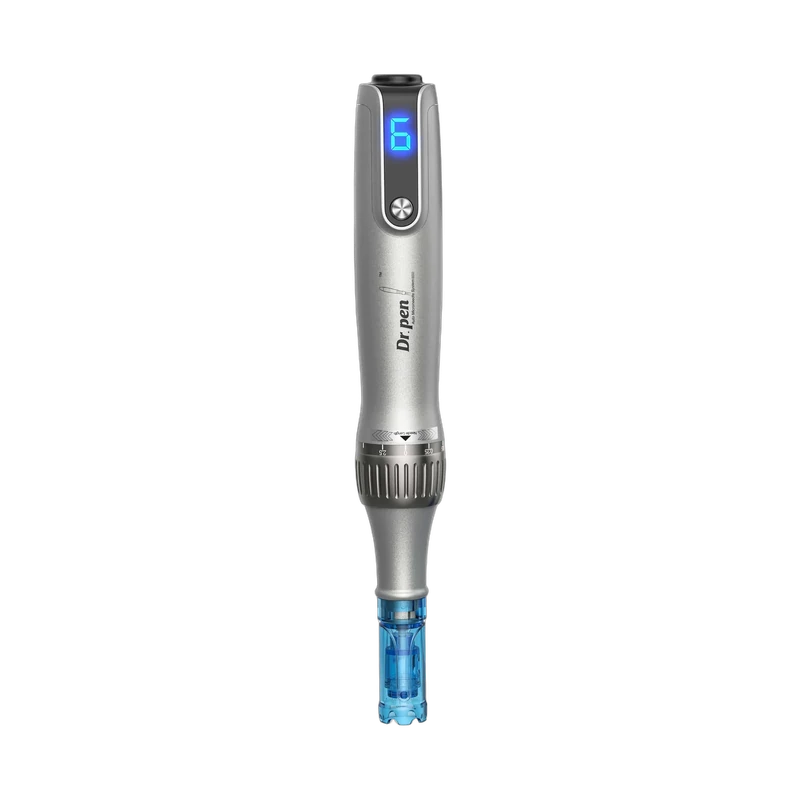
Dr. Pen Ultima M8S

$129

8.2 / 10
Celliara Score
Efficacy8.5
Ease of Use8.0
Value8.0
Clinical Backing8.3
★ Best Overall ✓ Editor's Pick
Our Top Pick

Dr. Pen Ultima M8S

Best overall motorized microneedling pen for home use

Why it wins

The Dr. Pen M8S delivers motorized, adjustable-depth microneedling with anti-backflow interchangeable cartridges. The 16,000 RPM motor produces cleaner channel formation per pass than its predecessor, and USB-C charging plus an LCD speed display make daily use practical.

The Dr. Pen M8S is the clearest value in at-home microneedling for 2026. For home use, stay at 0.25–0.5mm depth — this range improves skin texture, reduces pore appearance, and dramatically increases serum absorption over 4–8 weeks of consistent weekly sessions.

Best suited for You want motorized, adjustable-depth microneedling and will commit to a consistent weekly protocol.
Not for you if First-time users who have not researched technique and depth settings
Buy on Amazon → Read full review →

Free returns available if it’s not the right fit.


Best Overall

Dr. Pen Ultima M8S — The Dr. Pen M8S delivers motorized, adjustable-depth microneedling with anti-backflow

Best Luxury Pick

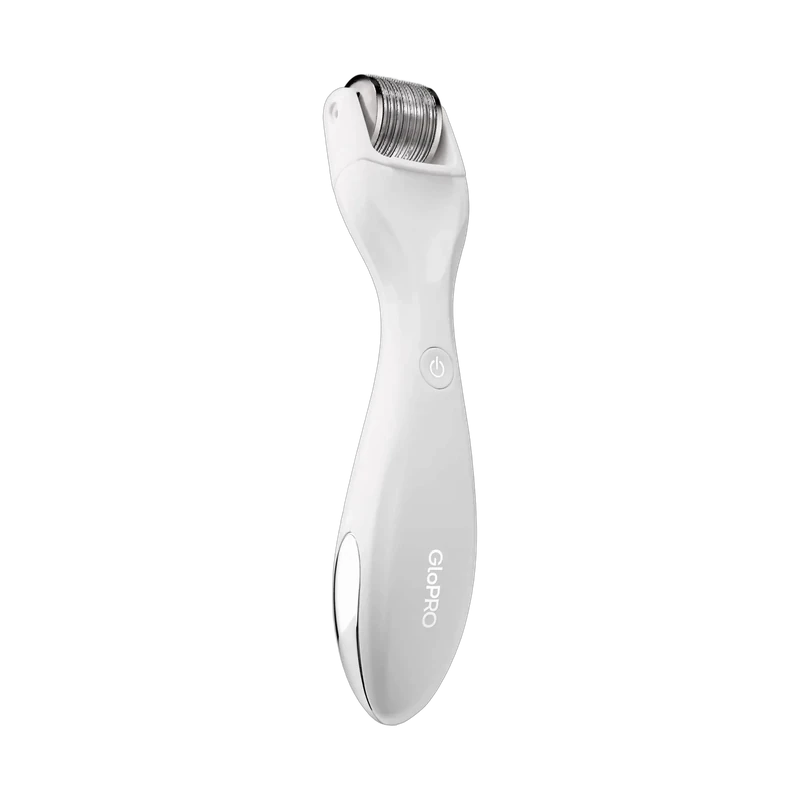
BeautyBio GloPRO Face Tool — The GloPRO is the only consumer microneedling roller with FDA


Other Top At-Home Microneedling Devices Picks

#2 Best Luxury Pick
BeautyBio GloPRO Face Tool

$199

7.6 / 10
Celliara Score
Efficacy7.0
Ease of Use9.0
Value7.0
Clinical Backing7.4

BeautyBio

GloPRO Face Tool

Best for: FDA-registered roller with built-in LED red light — the premium at-home option

Why it wins

The GloPRO is the only consumer microneedling roller with FDA registration and built-in LED red light therapy. Fixed 0.3mm titanium needles make it ideal for beginners who don't want to manage depth settings.

BeautyBio's GloPRO is the cleanest entry into at-home microneedling for luxury buyers. It pairs a 0.3mm titanium microneedle roller with 8 red LED lights and a VibroTactile motor. Strong trust signals, low complexity. Trade-off: roller-style needles enter skin at an angle rather than vertically — less precise than a motorized pen.

Best suited for You want a premium, low-complexity FDA-registered experience with built-in LED — no depth settings to manage.
Limitations to consider Users seeking deeper treatment depths or full depth flexibility

Pros

  • FDA-registered and doctor-developed — strong trust signals
  • Built-in LED red light therapy enhances post-needle absorption
  • Very easy to use — no depth settings to manage
  • Purpose-built serum ecosystem (R45, Prep Pads)

Cons

  • Fixed 0.3mm depth — no adjustment for different zones
  • Higher price than motorized pens with more features
  • Roller-style needle entry is less precise than motorized vertical motion

Best Luxury Pick · Available on Amazon

Free returns available if it’s not the right fit.

Most readers choose Dr. Pen Ultima M8S for overall results and ease of use.


Compare All Best At-Home Microneedling Devices of 2026

Feature Best Overall Dr. Pen M8S BeautyBio GloPRO Face
Score 8.5 / 10 7.8 / 10
Price $129 $199
Best For Best overall Best luxury
FDA N/A FDA Registered
Warranty 1 year 1 year
Buy on Amazon Buy on Amazon

Choose Based on Your Goal

Still deciding? Find yourself below.


Which One Is Worth the Price?

Under $150

The Dr. Pen M8S ($129) is the clear value pick — motorized, adjustable depth, anti-backflow cartridges, USB-C charging. Delivers professional-grade mechanics at a consumer price. Replacement cartridges run $10–20 for a pack of 12.

$150–$250

The BeautyBio GloPRO ($199) sits in the premium tier. Fixed 0.3mm depth simplifies the experience — no settings to manage. Includes LED red light therapy and a doctor-developed serum system. Ongoing cost: Prep Pads and R45 serum are purpose-designed add-ons.


Which Device Is Right for You?

Best for serious home users

You've done your research and want motorized, adjustable-depth microneedling with the same mechanism used in professional settings.

Best for luxury / serum-pairing users

You want a premium, FDA-registered tool that integrates LED red light and pairs with a curated serum system — with no depth settings to manage.


Understanding the Technology

Microneedling works by creating controlled micro-injuries in the skin’s surface layer, triggering a wound-healing response that increases collagen and elastin production. Clinical devices operate at depths of 1.5mm–3mm for treating acne scars, deep wrinkles, and stretch marks. Consumer devices are limited to 0.25mm–0.5mm — shallow enough to boost serum absorption and stimulate surface-level collagen turnover without the risks of deep clinical treatment. The mechanism is well-established: a 2018 meta-analysis in the Journal of Cosmetic Dermatology confirmed statistically significant improvement in skin texture and scar severity scores across multiple RCTs. Key safety rule: microneedling should never be performed over active acne, broken skin, or infections — doing so spreads bacteria and worsens inflammation.


What to Look For

Needle Depth Range

At-home devices should stay in the 0.25mm–0.5mm range for routine use. Anything deeper requires clinical supervision. Motorized pens with adjustable depth give you flexibility — but resist the urge to go deep. Surface-level stimulation at 0.25mm–0.3mm is sufficient for serum absorption and texture improvement. Only move to 0.5mm for targeted scar work, and never exceed this at home.

Needle Type and Quality

Titanium needles hold their edge longer than stainless steel and are more corrosion-resistant. Look for surgical-grade stainless steel or titanium. Avoid any device with nickel-plated or chrome-plated needles if you have metal sensitivities. Needle count matters for coverage: 36-pin cartridges cover more area per pass; 12-pin is more precise for targeted spots.

Motorized vs. Manual

Motorized pens produce vertical needle penetration — the needle goes straight in and straight out. Manual rollers penetrate at an angle, creating a slight tearing motion as the wheel rotates. At 0.25mm this difference is small, but at 0.5mm+ the angled entry increases microtrauma and recovery time. For precision work, motorized pens are always preferable. Manual rollers are acceptable at 0.25mm for texture and absorption.

Hygiene and Cartridge Replacement

This is non-negotiable. Microneedling with a contaminated tip introduces bacteria directly into your dermis. Replace cartridges every 2–4 sessions for motorized pens. Replace manual roller heads every 10–15 sessions or when needles look bent under a magnifying glass. Store everything in the included case — never leave needles exposed. Do not share devices.

Contraindications (Read These First)

Microneedling should never be done over: active acne lesions or cysts (spreads P. acnes bacteria), active cold sores or herpes outbreaks, eczema or psoriasis flares, rosacea-prone skin (can trigger flares), sunburned or compromised skin, or freshly waxed/threaded areas. If you are on isotretinoin (Accutane), wait 6 months after stopping. If you are on blood thinners or have clotting disorders, consult your dermatologist first.


Our Recommendation

If you’re unsure, start with the Dr. Pen Ultima M8S — it offers the best balance of performance, usability, and long-term value.


Frequently Asked Questions

At 0.25mm depth: once or twice weekly — the skin recovers quickly at this depth and more frequent use is generally safe. At 0.5mm: once every 10–14 days — give the skin a full inflammatory response cycle to maximize collagen stimulation. Do not microneedle more frequently than this hoping for faster results — overdoing it causes chronic low-grade inflammation that impairs results.
No. This is one of the most important safety rules in this category. Microneedling over active acne creates micro-channels directly into infected follicles, spreading P. acnes bacteria across the face and worsening breakouts significantly. Wait until all active lesions are fully healed before needling. If you have persistent breakouts, consult a dermatologist before starting a microneedling protocol.
Immediately post-needling, the skin is maximally absorbent. Use this window for: hyaluronic acid (hydration, anti-inflammatory), growth factor serums (EGF, TGF-β for collagen support), vitamin C (antioxidant, brightening). Avoid: retinoids (too harsh on freshly needled skin), exfoliating acids (AHA/BHA — wait 48–72 hours), fragrance or essential oils (high irritation risk on compromised skin). Wait 24–48 hours before returning to your normal routine.
Yes — with important caveats. A 2018 meta-analysis in the Journal of Cosmetic Dermatology found statistically significant improvement in atrophic acne scar severity scores after 3–6 microneedling sessions in clinical settings. At-home devices at 0.25mm–0.5mm produce milder effects than clinical 1.5mm–2mm treatments, but measurable texture improvement and scar softening are achievable over 8–16 weeks of consistent use. Rolling scars respond better than ice-pick scars. Deep ice-pick scars require clinical treatment.
Initial improvement in skin texture and radiance: 4–6 weeks. Meaningful collagen-related changes (firmness, fine line reduction, scar improvement): 8–16 weeks minimum. Microneedling stimulates a wound-healing cascade — new collagen is synthesized over weeks, not days. Be consistent and patient. Most users see their clearest results after 3 months of weekly use at appropriate depths.
For most use cases, yes. The Dr. Pen M8 delivers vertical needle penetration via a motorized mechanism, which is more precise and consistent than the angled entry of a manual roller. At 0.25mm–0.5mm depth with a 36-pin cartridge, it also covers more surface area per pass than a roller. The learning curve is slightly steeper (pen angle and speed settings vs. just rolling), but the results ceiling is higher. At 0.25mm basic texture work, a quality roller is adequate — but for anything deeper or more targeted, the motorized pen wins.

Explore More


Reviewed by

Celliara Editorial Team

All device evaluations are based on clinical evidence and published research. Affiliate links are clearly disclosed. We do not accept payment for editorial coverage. Read our editorial policy →