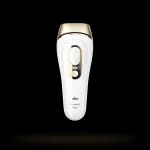
What Is At-Home Laser Hair Removal?
At-home laser hair removal refers to consumer devices designed to reduce unwanted hair growth through light-based energy delivered directly to the hair follicle. The term “laser hair removal” in the consumer space is technically imprecise — most at-home devices use Intense Pulsed Light (IPL) technology rather than a true monochromatic laser. IPL devices emit broad-spectrum light across a range of wavelengths (typically 500–1200nm), filtered to target melanin in the hair shaft and follicle. A small number of consumer devices use actual diode laser technology, but IPL remains the dominant at-home format.
The technology has moved progressively from medical and salon-only settings into consumer products since the early 2000s. Safety mechanisms built into at-home devices — including skin tone sensors, contact activation, and energy level limits — are designed to make the technology accessible without clinical supervision. Understanding the distinction between professional and at-home devices, and what realistic outcomes look like, is essential context before investing in a device or a protocol.
At-home laser and IPL hair removal sits within a broader landscape of energy-based skin and body devices. For context on how different energy technologies work across the face and body, the Celliara guides hub covers the full range of at-home device categories.
How It Works
Both laser and IPL hair removal operate on the principle of selective photothermolysis — the selective absorption of light energy by a specific target chromophore (melanin, in this case) while minimizing damage to surrounding tissue. When light energy is absorbed by melanin in the hair shaft, it converts to heat. This heat travels down the hair shaft to the follicle bulge and bulb, where it disrupts the follicle’s ability to regenerate new hair growth.
| Claim | What the evidence shows |
|---|---|
| At-home laser hair removal provides permanent hair reduction. | Clinical data shows that while at-home devices can lead to significant hair reduction, results are not permanent. Most studies indicate that maintenance treatments are necessary to sustain results, as hair regrowth can occur over time. |
| At-home laser hair removal is as effective as professional treatments. | Research supports that professional laser hair removal treatments typically yield faster and more effective results due to higher energy levels and more precise targeting of hair follicles compared to at-home devices, which often have lower energy outputs. |
| You can achieve smooth skin instantly with at-home laser hair removal. | Evidence indicates that at-home laser hair removal requires multiple sessions over several weeks or months to see noticeable results. Instant smoothness is not achievable, as hair growth cycles necessitate time for effective treatment. |
| At-home laser hair removal is completely safe for all skin types. | Clinical data shows that while many at-home devices include safety features, they may not be suitable for all skin tones. Devices are generally less effective on lighter hair colors and can pose risks for darker skin tones if not used correctly, leading to potential burns or discoloration. |
Critically, this mechanism is dependent on the hair being in its active growth phase — the anagen stage. Hair follicles cycle through anagen (growth), catagen (transition), and telogen (rest) phases asynchronously. At any given time, only a fraction of follicles in a given area are in anagen. This is why multiple sessions over time are required: each session targets the currently active follicles, while subsequent sessions catch others as they enter the growth phase.
True laser devices emit a single, precise wavelength — most commonly 755nm (alexandrite) or 808nm (diode) — matched specifically to melanin absorption peaks. This specificity allows for more targeted energy delivery. IPL devices emit a broader spectrum, which means some energy is absorbed by non-target chromophores (such as hemoglobin in blood vessels or melanin in skin), making precise energy delivery less efficient but still effective when properly calibrated.
The outcome of successful treatment is not instant hair disappearance. Treated hairs may take 1–3 weeks to shed following a session as the disrupted follicle releases the existing hair shaft. The reduction in regrowth becomes apparent in the weeks after shedding, when regrowth from treated follicles is absent or significantly finer.
What the Evidence Shows
Evidence for professional laser hair removal — the category with the deepest research base — is robust. Multiple controlled studies demonstrate 70–90% long-term hair reduction with professional diode or alexandrite laser protocols across skin types suitable for the technology. Research published in journals such as Lasers in Surgery and Medicine confirms that professional treatments produce permanent reduction (not necessarily elimination) of hair in treated follicles over a series of sessions.
Evidence for at-home IPL and diode devices is more limited but directionally consistent. Research suggests that at-home IPL devices produce meaningful hair reduction — studies indicate 50–75% reduction over 8–12 week protocols with consistent use. At-home outcomes fall below professional results primarily due to lower energy fluence (power per unit area), which limits the degree of follicular disruption achievable per session.
For broader context on how energy-based treatments are evaluated for efficacy, the guide on what is radiofrequency skin tightening provides a useful reference on how energy-based research translates from professional to at-home settings. Clinical data shows that at-home devices work best on individuals with high contrast between hair color and skin tone — specifically, darker hair on lighter skin. This reflects the selective photothermolysis mechanism: higher melanin contrast increases the specificity of light absorption to the follicle, reducing the risk of off-target skin absorption. For individuals with low contrast (light hair, any skin tone; or dark hair on dark skin), evidence for at-home IPL is significantly weaker, and professional alternatives should be strongly considered.
Evidence also indicates that maintenance sessions are required long-term. Research confirms that while IPL and laser treatments produce lasting reduction, complete permanent elimination of all treated follicles is not reliably achieved with at-home devices. Periodic maintenance (typically every 3–6 months following an initial protocol) is expected as part of a realistic long-term strategy.
What It Does NOT Do
At-home laser and IPL devices do not eliminate all hair after a single series of sessions. The term “permanent hair removal” is not accurate for at-home devices — and is even contested for professional treatments. The correct framing is “permanent hair reduction”: a significant, lasting decrease in hair density and growth rate, not complete elimination. Some follicles will be incompletely treated and require ongoing maintenance.
At-home IPL does not work on blonde, red, white, or grey hair. These hair colors contain low or absent eumelanin — the target chromophore. Without sufficient melanin to absorb the light energy, no meaningful heat is generated in the follicle. Evidence is consistent on this point: IPL and diode laser technology currently has no proven efficacy for light or unpigmented hair. This limitation applies to professional treatments as well, though certain emerging technologies are beginning to explore alternative targets.
At-home devices are not appropriate for all skin tones. Individuals with deeply pigmented skin (Fitzpatrick skin types V and VI) face elevated risk with most IPL devices because high baseline skin melanin competes with follicular melanin for light absorption. This can produce off-target skin heating, increasing burn risk. Most at-home IPL devices include skin tone sensors designed to prevent use on skin tones outside the device’s safe operating range. Professional treatments using Nd:YAG laser (1064nm) are the recommended modality for individuals with deeply pigmented skin.
What to Expect — Realistic Timeline
Research suggests that most users begin noticing reduced regrowth after 3–4 sessions, typically spanning 6–8 weeks given the recommended 2-week interval between sessions. The initial indicator of treatment response is a change in regrowth character: hairs return finer, slower, and in reduced density rather than failing to regrow entirely. Complete shedding of treated hairs occurs 1–3 weeks after each session.
By session 6–8 (approximately 12–16 weeks into protocol), evidence indicates that well-responding users achieve 50–70% visible hair reduction. At this point, treated areas require significantly less frequent maintenance than at baseline. Results at this stage are considered stable — continued reduction is typically slower and more incremental beyond this point.
A full initial protocol typically requires 8–12 sessions depending on the treatment area, hair density, and device energy output. Treatment areas with dense or coarse hair (such as legs or underarms) often require more sessions than areas with finer or less dense hair growth. Following the initial protocol, most users establish a maintenance rhythm of one session every 8–12 weeks to address follicles that were not in anagen during prior sessions.
Patience and protocol consistency are the most significant determinants of outcome. Missing sessions breaks the cycle of catching follicles in anagen, reducing cumulative efficacy. Evidence consistently shows that adherent users achieve substantially better outcomes than those who use devices sporadically.
Device Considerations
When evaluating at-home hair removal devices, the most important specifications are fluence (energy per unit area, measured in J/cm²), treatment window size, and skin tone compatibility range. Higher fluence enables more effective follicular disruption per session but requires the device’s safety features to be appropriately calibrated for user skin tone. Devices offering adjustable energy levels allow users to optimize fluence to their specific situation within safe limits.
Treatment window size determines the efficiency of full-body treatments. Smaller windows treat less area per flash, requiring more time for large areas like legs or back. Larger windows cover more area per flash, reducing total treatment time significantly — an important usability consideration for large-area protocols that users must adhere to consistently over months.
Flash count (total lifetime flashes) is a device longevity specification unique to IPL devices with replaceable or consumable flash cartridges. Some devices offer unlimited flashes (permanently installed LED or diode sources); others use xenon flash bulbs with finite life. Understanding the cost of continued use — whether through cartridge replacement or device repurchase — is relevant to total cost of ownership at-home hair removal decisions. For comparisons of leading devices across energy-based categories, the NuFace Trinity Pro vs. Foreo Bear 2 comparison demonstrates the analytical framework applied to other at-home energy modalities.
Safety sensors in at-home devices are functional constraints, not optional features. Most IPL devices will not fire unless the treatment window is in full contact with skin (to ensure proper energy coupling). Many include built-in spectrophotometers that read skin tone and prevent firing if the reading falls outside the device’s safe operating range. These sensors should be respected — attempting to override them for use on contraindicated skin tones poses real burn risk.
Contraindications
At-home IPL and laser hair removal devices have several clear contraindications. Skin tones outside the device’s tested operating range (typically Fitzpatrick types V–VI for most IPL devices) are a hard contraindication driven by burn and post-inflammatory hyperpigmentation risk. Each device’s documentation specifies its safe skin tone range; this must be verified before purchase and before use.
Tattoos within the treatment area represent a specific contraindication. Tattoo pigments contain high concentrations of melanin and other chromophores that absorb light energy intensely, creating a risk of significant localized burning, pigment disruption, and scarring. The treatment window should never be applied directly over tattoos. Treatment near tattoos should maintain a meaningful margin of clear skin.
Pregnancy is a universal contraindication for IPL and laser devices. The safety of light-based energy therapies during pregnancy has not been established in clinical research, and the precautionary principle applies. Active skin infections, open wounds, herpes simplex lesions, or inflammatory conditions in the treatment area preclude use until resolved.
Photosensitizing medications — including doxycycline, tetracycline, certain antihistamines, and NSAIDs — increase skin sensitivity to light exposure and elevate the risk of adverse reactions. Individuals on these medications should consult a healthcare provider before beginning an IPL protocol. A personal or family history of skin cancer in the treatment area warrants medical consultation before use of any light-based treatment device.
IPL devices differ significantly in power, coverage, and skin tone compatibility
Treatment windows, energy output, and hair color suitability all affect results. Compare the leading options before committing.
Compare IPL Devices →