A Celliara guide to at-home hair removal devices
IPL vs Laser Hair Removal: What’s Actually Different
IPL vs Laser Hair Removal: What’s Actually Different
If you’ve spent any time researching at-home hair removal devices, you’ve almost certainly run into both terms — IPL and laser — used interchangeably, inconsistently, or in ways that seem designed to confuse. They are not the same technology. Understanding the difference changes how you evaluate devices, set expectations, and choose what’s right for your skin type and hair color.
What IPL Actually Is
IPL stands for intense pulsed light. It is a broad-spectrum light source — meaning it emits a wide range of wavelengths simultaneously, filtered to target specific chromophores in the skin. In the context of hair removal, the target is melanin, the pigment found in hair follicles.
Because IPL is broad-spectrum rather than a single coherent beam, it disperses energy across a larger area. This makes it faster to treat wide zones — legs, arms, torso — and the light pulse heats the melanin in the follicle to disrupt the growth cycle. How much energy reaches each follicle depends on the device.
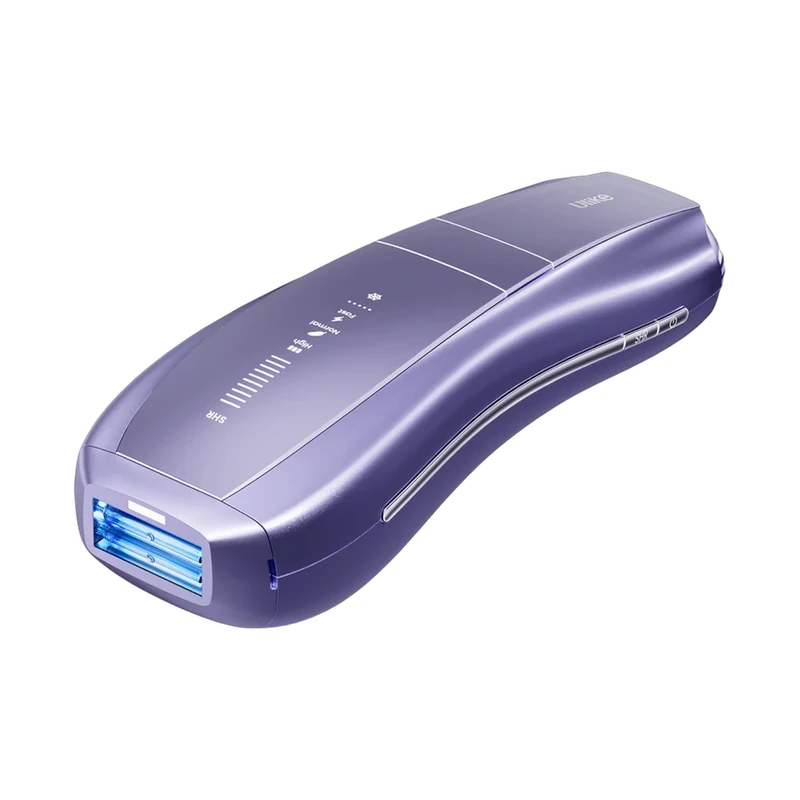
Most at-home hair removal devices on the market — including popular units from Braun, Philips, and Ulike — are IPL devices, even when their marketing language skirts around the term. The broad-spectrum, large-flash-window design is the tell.
What Laser Hair Removal Actually Is
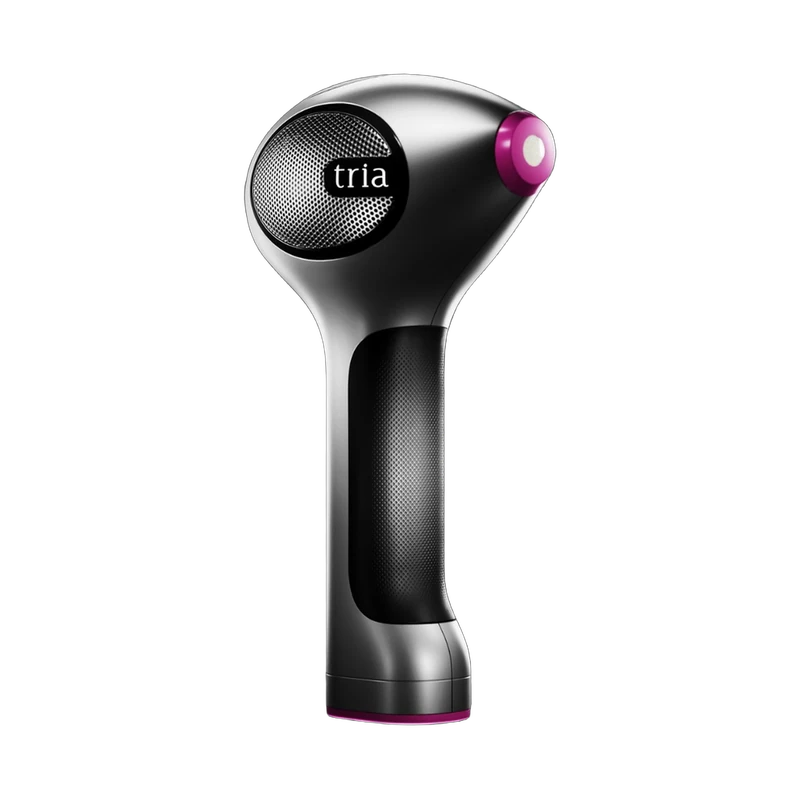
Laser hair removal uses a single, coherent wavelength of light delivered in a focused beam. In clinical settings, multiple laser types are used — Nd:YAG, alexandrite, ruby — each optimized for different skin tones and hair characteristics. Among the home hair-removal devices Celliara has reviewed, the laser is the Tria 4X, an 810nm diode laser.
That single wavelength is significant. A single wavelength is a difference in how light is delivered, not by itself a better result, and home lasers run at lower energy than clinical systems. The tradeoff is treatment speed: the beam window is smaller, so covering large body areas takes longer.
For a deeper look at how at-home laser devices work mechanically, see our guide on what at-home laser hair removal actually is.
The Key Differences Between IPL and Laser
Wavelength Specificity
This is the core technical difference. IPL emits filtered light across a spectrum; a laser emits a single wavelength. That is a difference in how energy is delivered, not proof that one format gives a better result.
Energy Density
IPL spreads each pulse over a larger flash area; a laser delivers it through a smaller window. Neither approach is inherently superior for all users; the better option depends on hair color, skin tone, and the specific device in question.
Treatment Area Coverage
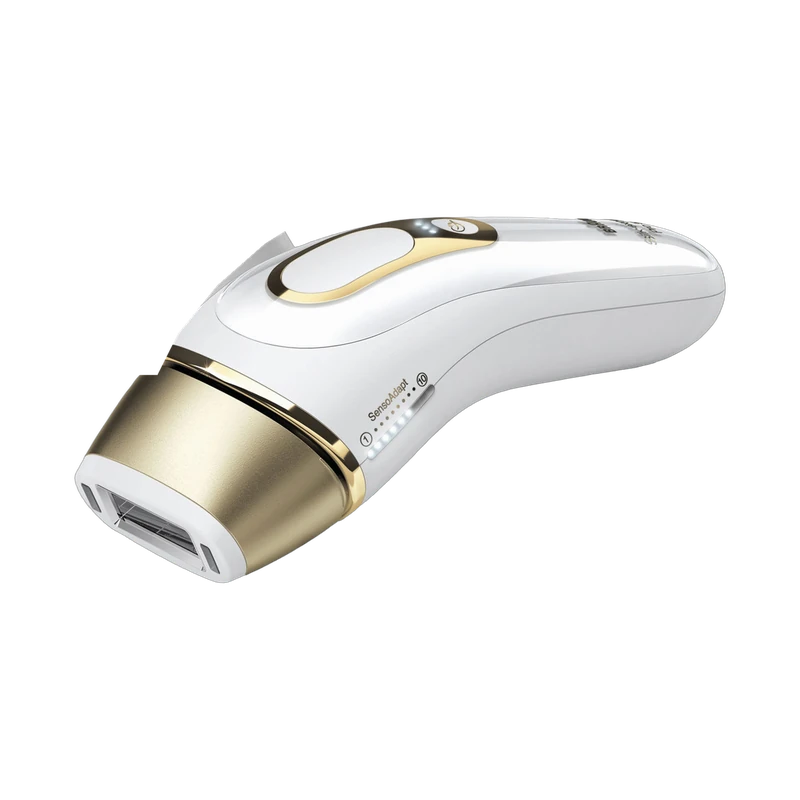
IPL has a meaningful speed advantage for large body areas. The flash windows on devices like the Braun Silk-Expert Pro 5 cover substantially more surface per flash than the small beam window on the Tria Laser 4X. If treating both legs is the primary goal, IPL is considerably faster per session. Laser is more practical for smaller, precise zones — upper lip, underarms, bikini line.
Skin Tone Safety
This is where the differences matter most. Both technologies target melanin, so makers limit the skin tones their devices treat. Tria states the 4X is not suitable for Fitzpatrick V–VI: that is a use restriction, not a call for caution or lower settings. IPL makers set their own limits, often with their own charts rather than Fitzpatrick types.
The Fitzpatrick Scale and Why It Matters
The Fitzpatrick skin phototype scale classifies human skin from Type I (very fair, always burns, never tans) through Type VI (deeply pigmented, never burns). For at-home light-based hair removal, this scale is the single most important safety variable.
IPL makers state their own ranges: EvenSkyn states its Pulsar for Fitzpatrick I–IV, while Braun and Ulike use their own skin-tone charts, which should not be mapped onto Fitzpatrick types. Sensors such as Braun’s SensoAdapt adjust flash power as they read the skin, but they do not widen the range a device suits.
The Tria 4X is stated for Fitzpatrick I–IV and not V–VI, and the home hair-removal devices Celliara has reviewed include no laser stated for darker skin. If you have darker skin, check the specific device’s stated range before you buy; choosing between IPL and laser does not change a maker’s restriction.
What the Clinical Literature Says About Efficacy
Both technologies are used for long-term hair reduction rather than permanent removal of every hair. Evidence from clinical systems does not map cleanly onto home devices, which run at lower energy, and Celliara’s evidence record does not establish that either format gives better results at home.
Makers’ own studies are device-specific — Braun reports its lower-leg results, Tria an earlier home laser — and do not compare the two technologies. The at-home variables — following the maker’s schedule, device contact and preparation — have a direct practical effect on results.
Most “Laser” Devices You’re Shopping Are Actually IPL
This is the part the product pages don’t advertise clearly. When you browse at-home hair removal on Amazon or at Sephora, the vast majority of devices — regardless of how they’re described — are IPL. Braun’s Silk-Expert line, the Philips Lumea series, Ulike’s Sapphire Air series: all IPL. The term “laser” appears in marketing copy because it’s the more recognizable consumer term, but the underlying technology is broad-spectrum pulsed light.
Among the hair-removal devices Celliara has reviewed, the exception is the Tria 4X, an 810nm diode laser FDA-cleared (K090820) for home hair reduction. It is slower to treat large areas because of its smaller window, but it is a genuine laser device, not an IPL unit with different branding.
For a direct head-to-head breakdown of how these two approaches compare in practice, see our Braun Silk-Expert Pro 5 vs Tria Laser 4X comparison.
Devices named in this guide
Current facts, compatibility and scores come from each device’s Celliara review.
Who Each Technology Is Better For
IPL tends to be better suited for:
People treating larger body areas who want faster session times. Those whose skin tone and hair colour fall within the exact device’s chart. Users who want a device that works across multiple applications, since many IPL units include attachments for different zones. People who prioritize session speed and broader surface coverage.
Diode laser (Tria 4X) tends to be better suited for:
People who want a laser rather than IPL, whose skin and hair are within Tria’s stated range (Fitzpatrick I–IV, naturally light-brown or darker hair), and who are comfortable with slower coverage, mainly on smaller, precise areas.
Neither technology is universally superior — the right answer depends on the combination of your skin tone, hair color, target area, and how you weight session speed against a smaller window’s precision on small areas.
Making the Decision
If you’re still building a picture of what at-home hair removal actually involves mechanically, start with the foundational guide on how at-home laser hair removal works. When you’re ready to compare specific devices across both categories, the best at-home laser hair removal devices roundup covers the current field with the same editorial standards applied here.
The terminology confusion in this category is real and, frankly, often serves device manufacturers more than buyers. Knowing what IPL and laser actually mean puts you in a position to evaluate devices on their actual merits — not on whatever the box says.
This article is for informational purposes only and does not constitute medical advice. See our full disclaimer. Celliara does not independently test devices. See our editorial policy for how we evaluate and score products.
Where to go next
See current recommendations
Our ranked page names the devices we recommend and who each one suits.
- Best Overall Braun Silk Expert Pro 5
- Best Value Ulike Air 4
- Best for Cooling + Automatic Power Ulike Air 10
- Best for Face, Body and Bikini Line Philips Lumea 8000 Series
- Best for Laser Precision on Small Areas Tria Hair Removal Laser 4X
Decide between two devices
Explore the category
What separates the devices Celliara has reviewed, with every review in one place.
At-home hair removal