A Celliara guide to at-home hair removal devices
At-Home Laser Hair Removal Safety: What You Need to Know Before You Buy
At-Home Laser Hair Removal Safety: What You Need to Know Before You Buy
At-home IPL and laser devices have become genuinely accessible — the price points have dropped, the devices have improved, and the category is no longer limited to early adopters willing to spend on clinical alternatives. But the safety profile of these devices is meaningfully different from clinical treatments, and the gap matters.
Why At-Home Devices Require More User Responsibility
In a clinical setting, a trained practitioner assesses your skin type, selects appropriate parameters, and monitors your response in real time. At home, that entire layer of oversight is removed. What’s left is the device, its built-in safety systems, and how carefully you follow the guidance.
Clinical laser systems are operated at significantly higher fluences than at-home devices — they’re more powerful, faster, and capable of producing results in fewer sessions. They’re also used by practitioners trained to identify when a patient shouldn’t be treated, or when parameters need adjusting mid-session. At-home devices operate at lower energy outputs, partly because that lowers the risk ceiling when there’s no professional in the room.
That lower energy output doesn’t eliminate risk. Burns, hyperpigmentation, and hypopigmentation are all documented adverse effects of at-home IPL and laser misuse — typically when devices are used on incompatible skin tones, over active skin conditions, or without adequate sun avoidance. The devices themselves include safety interlocks for a reason. Understanding those interlocks — and the reasoning behind them — is what using these devices responsibly looks like.
The Fitzpatrick Scale: The Most Important Variable
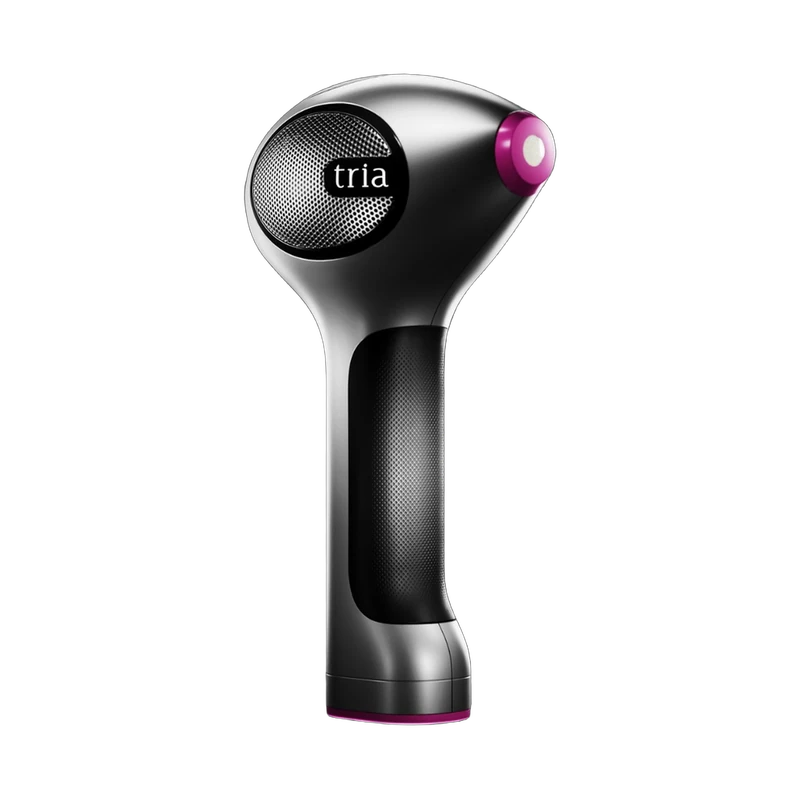
The Fitzpatrick skin phototype classification is a common way to describe skin, and some makers, such as Tria, state compatibility in Fitzpatrick types; others, such as Braun and Ulike, use their own charts. Developed in 1975 by dermatologist Thomas Fitzpatrick, it categorizes skin into six types based on melanin content and how skin responds to UV exposure.
Type I
Very fair skin. Always burns in the sun, never tans. Typically corresponds to very light skin with red or blonde hair and blue or green eyes. Contrast with dark hair is highest here, but hair colour matters as much: makers set it differently. Tria says its 4X is for naturally light-brown or darker hair, while Braun says its Pro 5 is not for very blonde, red, grey or white hair and uses its own chart.
Type II
Fair skin. Burns easily, tans minimally. Most commonly associated with light hair colors and lighter eye colors, though not exclusively. This is within the stated range of devices such as the Tria 4X (I–IV); check your hair colour against the maker’s guidance.
Type III
Medium skin. Sometimes burns, gradually tans. A wide range of European and some Asian skin tones fall in this range. This is within the Tria 4X’s stated range; for IPL devices, check the maker’s own chart, since several use their own skin-tone scales rather than Fitzpatrick types.
Type IV
Olive to light brown skin. Rarely burns, tans easily. Many Mediterranean, Hispanic, Middle Eastern, and some Asian skin tones. This is the upper end of the Tria 4X’s stated range (I–IV). IPL makers set their own limits: EvenSkyn states its Pulsar for Fitzpatrick I–IV, while Braun and Ulike use their own skin-tone charts, which should not be mapped onto Fitzpatrick types.
Type V
Brown skin. Very rarely burns, tans deeply. South Asian, some East Asian, Hispanic, and lighter African heritage skin tones. Higher melanin in the skin competes with the hair for the light, which raises burn risk. The Tria 4X is not for Fitzpatrick V–VI — a manufacturer restriction, not a reason to use a lower setting — and the home hair-removal devices Celliara has reviewed include no laser stated for Type V skin. IPL makers set their own limits: Silk’n’s Infinity Fast is not for naturally dark skin, and Ulike does not recommend the Air 10 for dark brown skin. Check the exact device’s chart.
Type VI
Deeply pigmented skin. Never burns. The makers of the home devices Celliara has reviewed exclude the deepest skin tones: Tria excludes Fitzpatrick V–VI, JOVS excludes type VI and Ulike rules out dark brown skin. Professional options are a question for a qualified clinician.
For a detailed breakdown of how IPL and laser differ in their skin tone safety profiles, see our IPL vs laser hair removal guide.
Hair Color Requirements
Both IPL and laser work by targeting melanin in the hair follicle. This creates a fundamental limitation: hair that lacks sufficient melanin will not respond predictably, if at all.
Dark brown and black hair are the most responsive — high melanin content, strong absorption of the light energy. Medium brown hair typically responds well. Light brown hair is workable at the right skin tone contrast. Light or unpigmented hair has little of the melanin the light targets, so makers limit which hair colours their devices suit, and they draw the line differently: Tria says its 4X is for naturally light-brown or darker hair, while Braun says its Silk Expert Pro 5 is not for very blonde, red, grey or white hair and points you to its own chart. Hair-colour eligibility is model-specific, so check the exact device’s chart or instructions for your hair colour.
This isn’t a device quality issue — it’s a physics limitation of melanin-targeting technology.
Contraindications: When Not to Use These Devices
Active Skin Conditions
Each manufacturer sets who should not use its device, so read the exact device’s current warnings before you buy or use one. Where a manufacturer says not to use its device, a clinician’s advice does not change that. Check the exact device’s warnings for active eczema, psoriasis, rosacea or other inflammation, broken skin, open wounds, active acne or cold sores in the treatment area.
Photosensitizing Medications
If you take a medication that increases light sensitivity, check the exact device’s warnings and talk to your prescriber; Silk’n, for example, lists photosensitivity among its Infinity Fast exclusions.
Hormonal Conditions
Hormonal conditions such as polycystic ovary syndrome (PCOS) can drive hair growth. Celliara’s evidence record does not establish how they change results with home devices; ask your clinician, within the limits the device’s maker sets.
Tattoos
Tattoos and dark marks in the treatment area absorb light strongly, so makers tell you to avoid them.
Pregnancy
Silk’n lists pregnancy among its exclusions; check what the exact device’s maker says about pregnancy. Where a maker says not to use its device, a clinician’s advice does not change that.
Recent Sun Exposure and Tanning
Tanned skin temporarily has more melanin, which is why makers restrict treatment after tanning — Silk’n, for example, lists recent tanning among its exclusions. Follow the exact device’s guidance on sun exposure before and between sessions.
Before a Session: What Your Manual Covers
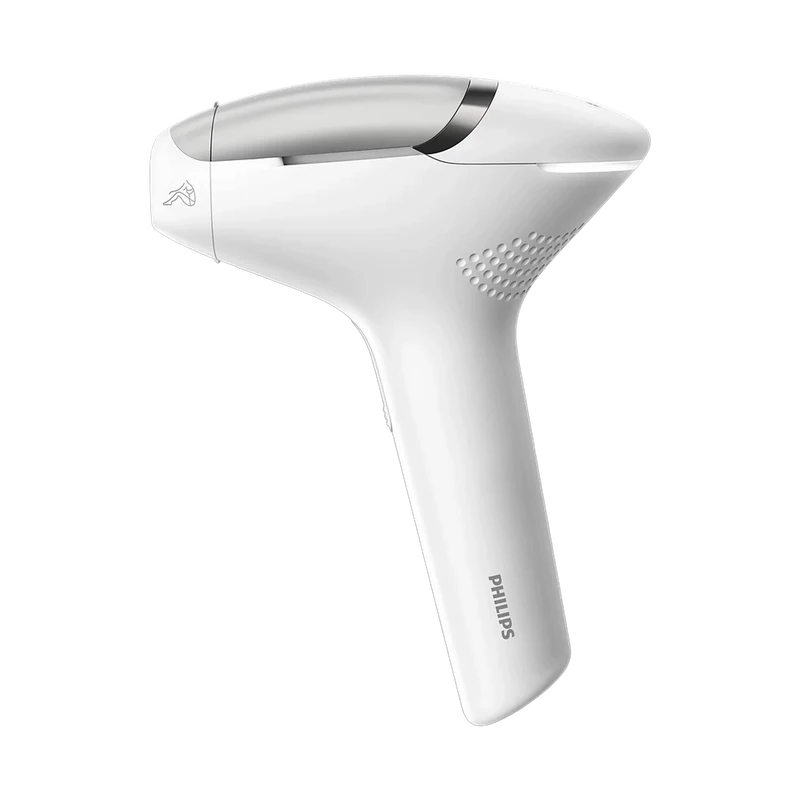
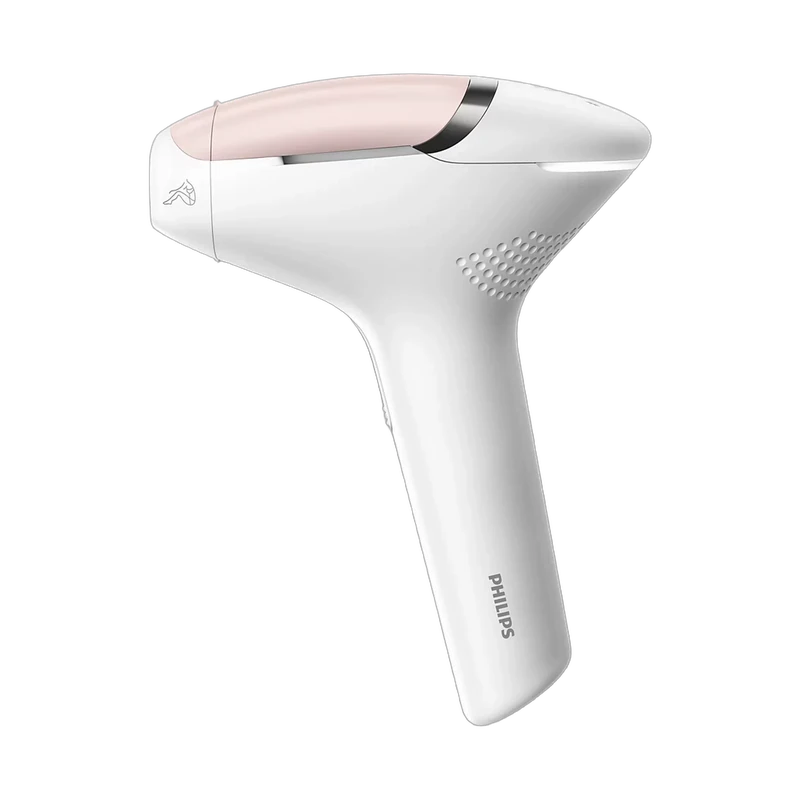
Hair removal first. Makers ask you to remove surface hair before a session, and how differs: Tria and Braun say to shave the area, Ulike says to shave anything longer than 2 mm, and Philips allows shaving, waxing or epilating, waiting 24 hours after waxing.
Skin test as the maker directs. Many makers require a skin test first, with their own waiting times: Philips says to wait 24 hours before treating a new area, Ulike two hours for the Air 4, and Silk’n requires a spot test on each area you plan to treat.
Clean, dry skin. Makers such as Tria and Philips call for clean, dry skin before each session.
After a Session: Follow the Manual
Sun protection. Follow the exact device’s aftercare guidance on sun exposure and sun protection for treated areas.
Hair removal between sessions. Makers differ here too: Philips allows shaving, waxing or epilating, while others ask you to shave. Check your device’s manual.
How to Read a Device’s Safety Window
Many makers publish a skin-tone and hair-colour chart, and some devices add a sensor that reads your skin and adjusts or blocks flashes.
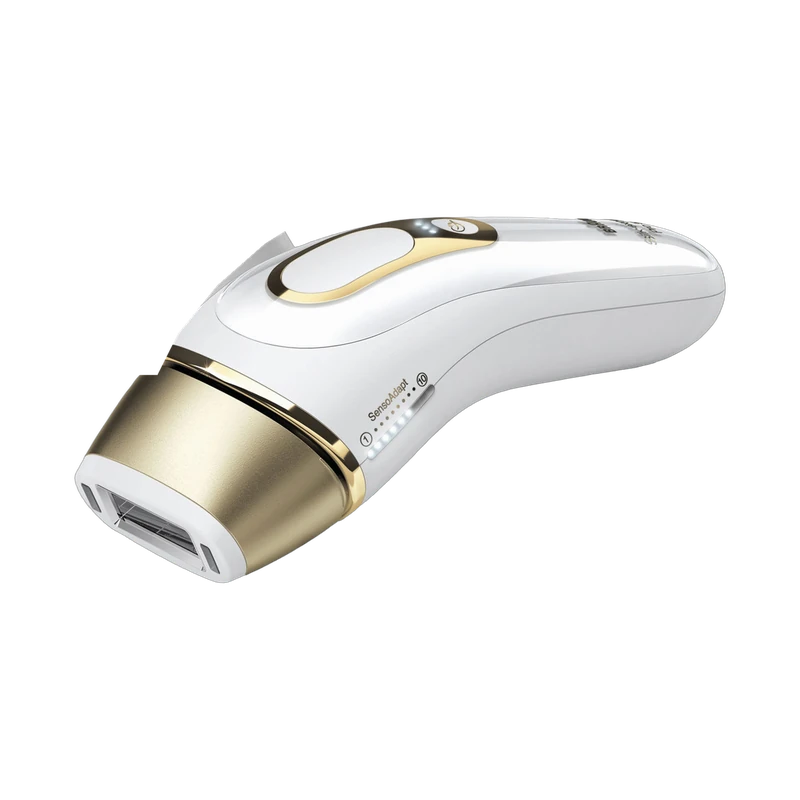
Check the device’s own chart: Tria states Fitzpatrick I–IV, while Braun uses its own skin-tone chart, which should not be mapped onto Fitzpatrick types. A sensor such as Braun’s SensoAdapt on the Braun Silk Expert Pro 5 adjusts flash power as it reads your skin, but it does not widen the range of skin tones and hair colours the device suits.
Hair removal devices named in this guide
Current facts, compatibility and scores come from each device’s Celliara review.
Building Your Safety Foundation
Suitability is decided by the exact device’s chart, exclusions and instructions, not by a general rule. Used within those limits, these devices are designed for home use.
If you’re still deciding between technology types, see our guide to IPL vs laser hair removal. For how the technology works, start with what at-home laser hair removal actually is. When you’re ready to evaluate specific devices, the best at-home laser hair removal devices ranking applies Celliara’s scoring to the current field.
Safety here is not a disclaimer — it’s the foundation that determines whether the device works for you or causes a problem. Getting this right matters.
This article is for informational purposes only and does not constitute medical advice. See our full disclaimer. Celliara does not independently test devices. See our editorial policy for how we evaluate and score products.
Where to go next
See current recommendations
Our ranked page names the devices we recommend and who each one suits.
- Best Overall Braun Silk Expert Pro 5
- Best Value Ulike Air 4
- Best for Cooling + Automatic Power Ulike Air 10
- Best for Face, Body and Bikini Line Philips Lumea 8000 Series
- Best for Laser Precision on Small Areas Tria Hair Removal Laser 4X
Decide between two devices
Explore the category
What separates the devices Celliara has reviewed, with every review in one place.
At-home hair removal