A Celliara guide to RF devices
RF Skin Tightening at Home: What Clinical Evidence Does and Doesn’t Tell You
From Clinic to Home
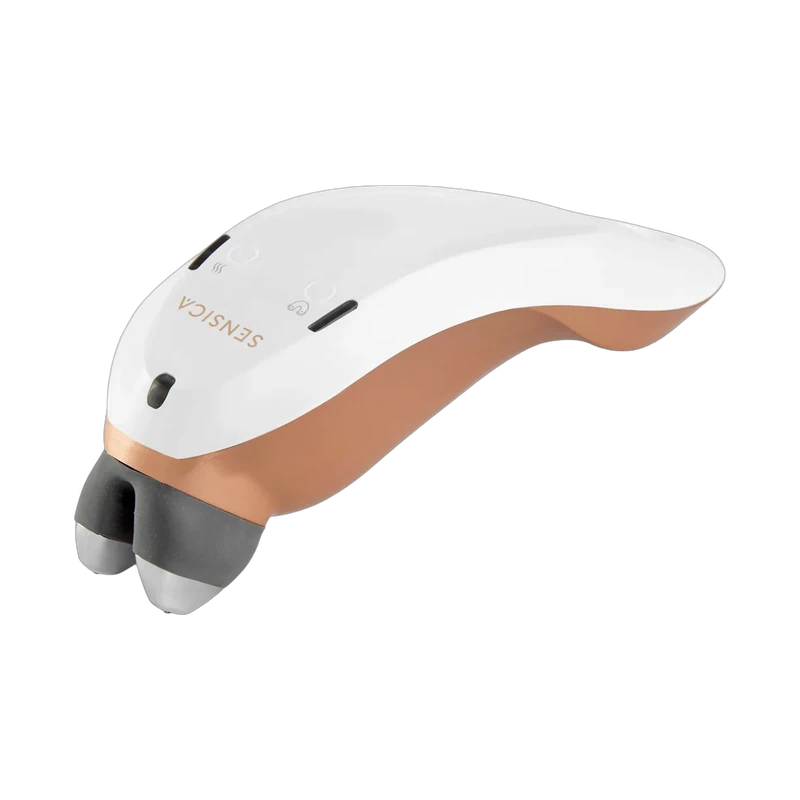
Radiofrequency (RF) skin tightening uses electromagnetic energy in the megahertz range to generate heat within skin tissue. Unlike light-based technologies, RF energy is not absorbed by pigment; it heats tissue according to its electrical properties, and professional systems use that heat to remodel collagen. Home devices still set their own suitability limits — Sensica’s clearance, for example, covers Fitzpatrick I–IV only.
The technology has a long clinical history. Professional systems such as Thermage came first, and the category has since expanded — professional systems now include monopolar, bipolar, fractional, and microneedling-combined variants (such as Morpheus8). Consumer RF devices have followed, applying the same fundamental electromagnetic principles at reduced energy levels accessible for home use.
That energy difference is the central issue for anyone evaluating at-home RF devices. For a foundational overview of the technology, see our guide to what radiofrequency skin tightening is.
How It Works
RF skin tightening operates through two sequential mechanisms, both dependent on delivering thermal energy to dermal tissue.
Immediate Collagen Contraction
In professional treatment, collagen fibers contract when heated to high temperatures: the triple-helix structure of collagen partially denatures and the fiber shortens, which is the basis of the immediate, partial tightening professional RF aims for.
That heating describes professional treatment. Sensica’s home device, for example, switches RF off when skin temperature exceeds 40°C: that is a skin-temperature control. It does not tell you the temperature of deeper tissue, or whether collagen contraction occurs, so clinical contraction temperatures cannot be used to describe what happens beneath the surface in a home session.
Neocollagenesis: The Wound-Healing Response
The more durable long-term effect comes from the tissue’s response to controlled thermal injury. When collagen is heated to the target range, the body interprets it as a wound and initiates a repair cascade: inflammatory mediators signal fibroblasts to produce new collagen, filling in the thermally modified zones with newly synthesized extracellular matrix. This neocollagenesis process unfolds over weeks to months after professional treatment.
Why Clinical Temperatures Don’t Transfer
Professional results depend on delivering enough heat, deep enough, for long enough. Home devices use their own temperature controls at lower power, and no universal tissue temperature has been established that a home device must reach to produce a result, so a clinical thermal figure is not a home-device rule in either direction.
What the Evidence Shows
Professional Systems: A Larger Literature
Professional systems such as Thermage, and RF microneedling such as Morpheus8, have a substantial clinical literature, including histological studies of collagen remodeling in treated tissue.
This evidence is worth knowing — but it does not transfer to consumer devices.
Why the Evidence Doesn’t Transfer
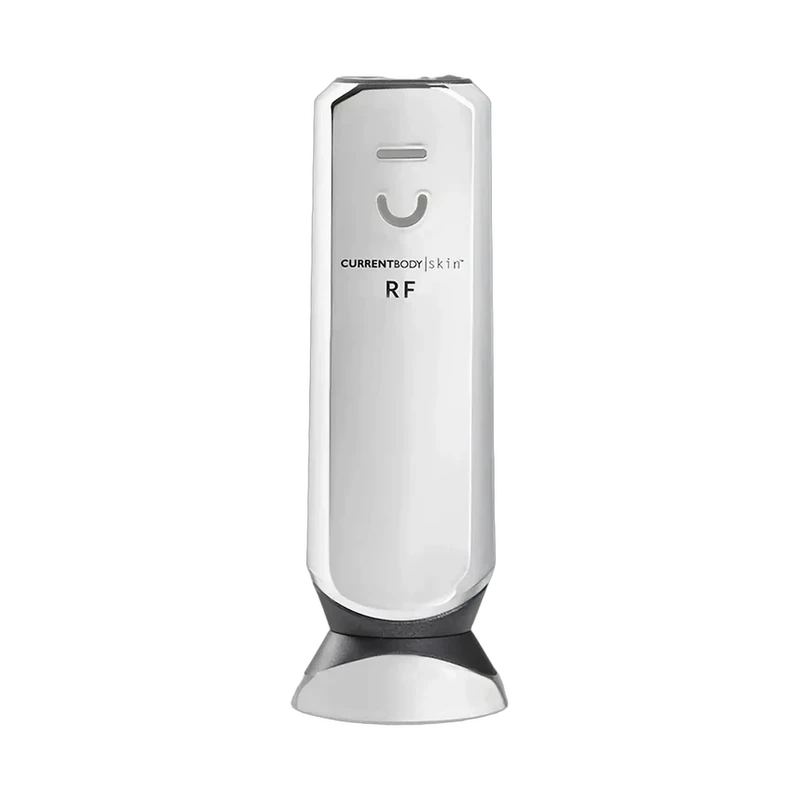
Professional RF systems deliver far more energy per treatment than home devices, often with cooling that protects the surface while deeper layers heat, and they are operated by trained practitioners. Home devices run at lower power with their own controls — temperature sensors and cut-offs on CurrentBody Skin RF and Sensica Sensilift, active cooling on EvenSkyn Lumo+ — so configuration and controls differ device by device.
Clinical temperature and depth figures describe clinical systems; what temperature a home device reaches at any depth is generally not published, so those figures cannot be used to predict a home result in either direction.
Consumer Device Evidence
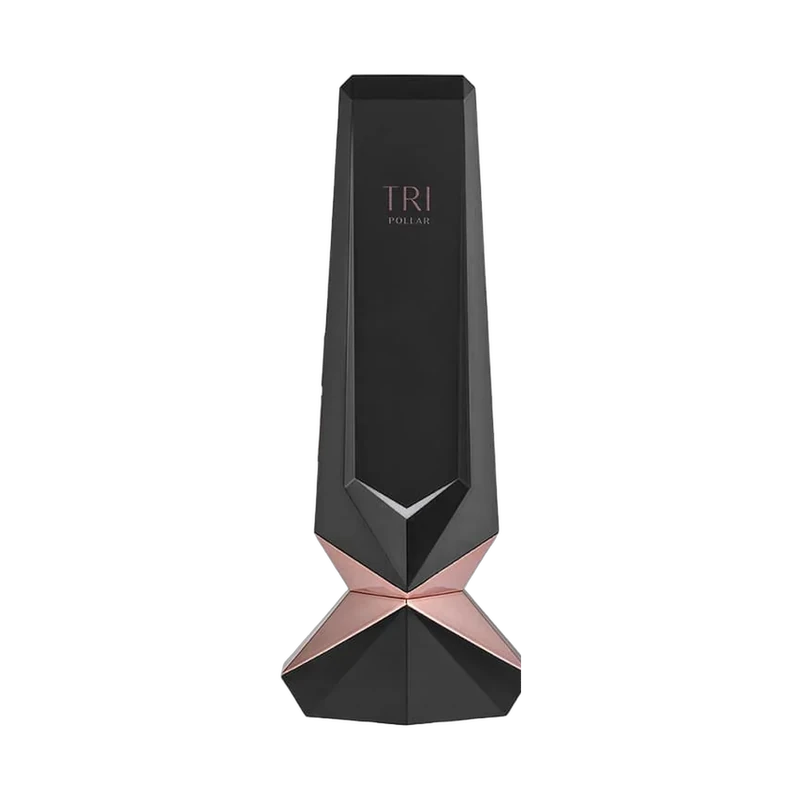
Exact-device evidence for home RF is limited and specific. Sensica’s Sensilift has an exact-device study behind its FDA clearance: 89–95% of 35 completers improved at least one wrinkle grade after eight weekly sessions, but the study was manufacturer-sponsored, had no control group and covered only adult women with Fitzpatrick I–IV skin. The research cited for the TriPollar STOP Vx2 used a physician-administered TriPollar system, not the STOP Vx2 itself, and Celliara found no published study of the EvenSkyn Lumo+. Evidence for one device does not transfer to another.
“Modest” is the operative word. Where home RF studies exist, they describe changes that are measurable but subtle in appearance. Users who expect professional-grade tightening will be disappointed. A home device is a lower-energy routine, and its effects, where studied, are subtle.
The bottom line: home RF uses the same heating principle as professional RF at much lower energy, and its effects, where studied, are smaller. It is not comparable to a Thermage session. It is not nothing.
What It Does NOT Do
Consumer RF does not address significant skin laxity. Meaningful sagging — pronounced jowls, significant neck laxity, deep skin folds — requires energy delivery that consumer devices cannot safely provide. The structural forces driving significant laxity (fat pad descent, ligament elongation, volume loss) are not reversed by the modest thermal stimulation consumer RF devices produce.
Results are not comparable to professional treatments. This cannot be overstated. A Thermage session and a consumer RF session are not the same intervention with different convenience profiles. They are different interventions with different physical energy levels and correspondingly different outcomes.
Results depend on following the routine. The exact-device evidence comes from courses of repeated sessions on the maker’s schedule — which ranges from weekly to several times a week — not from single or occasional sessions.
Don’t expect rapid tightening. In professional treatment, new collagen forms over weeks to months. For home devices, Celliara’s evidence record does not establish what causes any firmness felt right after a session, or whether collagen remodeling is taking place; where exact-device studies exist, they measured change after a course of repeated sessions — Sensica’s, after eight weekly sessions.
Volume loss is not treated. Loss of facial volume from fat pad atrophy and bony resorption produces hollowness that RF cannot address. Dermal fillers address volume; RF addresses tissue architecture. They are complementary, not interchangeable.
Owning a Home RF Device
Home RF is a routine, not a single treatment, and routines differ by device: CurrentBody Skin RF and Sensica Sensilift run once a week for eight weeks before less frequent top-ups, the TriPollar STOP Vx2 starts at two to three sessions a week for six to eight weeks, and EvenSkyn sets short sessions one to three times a week. Sessions can be long — CurrentBody puts a full face-and-neck session at about 70 minutes — and most devices need their maker’s gel every session. Some makers build ongoing sessions into their routines — the TriPollar STOP Vx2, for example, moves to two to four sessions a month — but how long any change lasts once you stop is not established in Celliara’s evidence record.
Individual variation is substantial. Age, skin quality, baseline laxity, baseline collagen density, and technique all influence outcomes. The range of responses to consumer RF is wide, and results are genuinely unpredictable for any individual user.
Device Considerations
Bipolar vs. monopolar configuration: Professional monopolar RF (Thermage) uses one active electrode on the skin and a grounding pad elsewhere on the body, driving current through a deep tissue column. Many home devices are bipolar — CurrentBody Skin RF, for example, uses 1 MHz bipolar RF through a four-electrode head — while others use multi-frequency designs such as the TriPollar STOP Vx2. Bipolar RF heats a shallower path than monopolar RF; configuration describes how heat is delivered, not what result it will produce.
Why a home device is not a clinic treatment: Lower energy and shallower heating mean a home device is not a substitute for a professional session; how large its effect is depends on the exact device’s evidence.
How to evaluate a consumer RF device:
- FDA clearance: A 510(k) clearance means a device was found substantially equivalent to a predicate for a stated use; it is not proof of results. Registration alone is not clearance.
- RF configuration: Configurations differ by device; some add LED, EMS or other modes, each of which needs its own evidence.
- Coverage area: Larger treatment heads cover more area per session but may compromise contact quality on facial contours.
- Energy output transparency: Brands that publish power output and frequency specifications are more credible than those that don’t. Vague claims about “advanced RF” without published specs should be viewed skeptically.
- Combination technologies: Some consumer devices pair RF with other modalities (EMS, LED, ultrasound). These combinations may provide additive benefit, but evaluate the evidence for each component separately. For an example of a combination device, see our EvenSkyn Lumo⁺ review.
To see the RF devices Celliara has reviewed, visit the RF skin tightening hub. For how RF differs from microcurrent, see microcurrent vs radiofrequency.
Home RF devices named in this guide
Current facts and scores come from each device’s Celliara review.
Contraindications
Each manufacturer sets who should not use its device, so read the exact device’s current warnings before you buy or use one. Where a manufacturer says not to use its device, a clinician’s advice does not change that. Check the exact device’s warnings for pacemakers and other implanted electronic devices, metal implants in the treatment area, pregnancy, and active skin conditions such as eczema, psoriasis, rosacea flares, open wounds, infections or sunburn. If your device also has light-based modes, check its warnings on light-sensitizing medications.
Frequently Asked Questions
Does at-home RF really work?
Where exact-device evidence exists, it shows gradual, modest change — Sensica’s study of the Sensilift, for example — but evidence for one device does not transfer to another, and results are not comparable to a professional session such as Thermage.
How often should I use RF at home?
It depends on the device: CurrentBody Skin RF and Sensica Sensilift run weekly for an eight-week course, the TriPollar STOP Vx2 starts at two to three times a week, and EvenSkyn sets one to three short sessions a week. Follow the exact device’s protocol. Overuse does not accelerate results and may cause skin irritation or barrier disruption from repeated heating.
Can at-home RF replace professional treatments?
No. Professional RF systems (Thermage, Morpheus8, Forma) operate at energy levels and tissue depths that consumer devices cannot safely replicate outside clinical settings. The outcomes are categorically different. At-home RF is a lower-intensity ongoing routine — it is not a substitute for clinical intervention when clinical intervention is indicated.
How should I judge an at-home RF device?
Look at the exact device’s evidence (an exact-device study, if any, and which people it covered), its clearance and stated use, its configuration and temperature controls, its routine and gel requirements, and whether the maker publishes meaningful specifications. For current recommendations, see our ranking of the best RF skin tightening devices; for every RF device Celliara has reviewed, the RF skin tightening hub.
Where to go next
See current recommendations
Our ranked page names the devices we recommend and who each one suits.
- Best Overall CurrentBody Skin RF
- Best for Comfortable Sessions Sensica Sensilift
Explore the category
What separates the devices Celliara has reviewed, with every review in one place.
RF skin tightening