A Celliara guide to LED face masks
How to Evaluate an LED Face Mask: Wavelength, Dose, Fit and Evidence
Wavelength, irradiance, dose, fit, clearance status and study evidence each answer a different question. This guide explains what each one tells you, what it does not, and how to weigh them before you choose a mask.
The short answer
A good LED face mask can be a useful at-home option for concerns such as skin texture, visible redness and signs of aging—but the wavelength numbers on the box are only part of the story. What matters is whether the exact mask combines a credible light setup, a realistic treatment schedule, good fit and evidence you can actually connect to the product you’re buying.
What Is an LED Face Mask?
An LED face mask holds an array of LEDs close to your face for a timed treatment. The practical advantage is convenience: instead of holding a wand or panel at a consistent position, you wear the device and let the mask handle placement. Fit still matters because distance and geometry affect how light reaches the skin, but you cannot calculate the real delivered dose from fit alone.
For the underlying science of how photobiomodulation works in skin tissue, see our guide to how LED light therapy works.
How It Works
LED face masks operate through the same photobiomodulation mechanisms as all therapeutic LED devices. One proposed explanation for red and near-infrared photobiomodulation involves cytochrome c oxidase (CCO), an enzyme involved in cellular energy production. You do not need to understand that pathway to shop for a mask—the important point is that a plausible biological mechanism is not proof that every device using these wavelengths will produce the same result.
Cytochrome c oxidase is an enzyme in the mitochondrial electron transport chain with absorption peaks in the red and near-infrared wavelength ranges. Researchers have explored how light’s interaction with it may influence downstream cellular activity, but this mechanism should not be read as proof that every LED mask will produce a specific collagen or elastin result. CCO is one proposed mechanism used to explain some photobiomodulation effects, but the biology is more complex than a single pathway.
Wavelength specificity matters enormously here. Red and near-infrared wavelengths are widely studied in photobiomodulation, including ranges around 633nm and 830nm. The evidence does not justify treating those two exact numbers as universally superior for every device, dose, tissue target, or outcome. Blue light at 415nm works through an entirely different mechanism: it targets bacterial porphyrins in Cutibacterium acnes to produce reactive oxygen species that kill acne-causing bacteria. These are distinct pathways with distinct applications.
The biphasic dose-response curve in PBM research is critical to understand: both too little and too much light exposure can reduce or eliminate therapeutic effect. There is an optimal dose window, measured in joules per square centimeter (J/cm²), calculated as irradiance (mW/cm²) multiplied by treatment time (seconds) and divided by 1,000. This is why session duration and device irradiance are both essential specifications — either variable alone is insufficient to evaluate a device.
What the Evidence Shows
The evidence base for LED photobiomodulation in skin applications has grown substantially over the past two decades, though it’s important to distinguish between what is well-supported and what is extrapolated.
Anti-aging (red/NIR): A frequently cited 2014 controlled study indexed as PMID 24286286 evaluated red and near-infrared photobiomodulation at the technology level. It is useful background evidence for this type of light therapy, but it was not a clinical trial of any consumer LED mask. Treated subjects showed significantly improved skin complexion and skin feeling, profilometrically assessed skin roughness, and ultrasound-measured collagen density. The study used broadband and red polychromatic light sources, not a mask. Other photobiomodulation studies have reported skin-related changes, but results vary by wavelength, dose, device, protocol, population, and outcome. Technology-level findings should not be transferred automatically to a specific consumer mask.
Acne (blue light): Blue and combined blue/red light have been studied for inflammatory acne, but effectiveness depends on the exact device, dose, treatment regimen, and acne severity. A consumer mask should be evaluated against its own labeling and evidence rather than category-level studies alone.
Wound healing (NIR): Photobiomodulation has also been studied in wound-healing settings, but that research involves varied clinical devices and protocols. It should not be used as proof that a consumer face mask will reproduce a medical wound-healing result.
What It Does NOT Do
LED masks do not replace professional treatments. Professional and consumer LED systems vary widely in output, geometry, wavelength verification, and treatment protocol. A professional setting should not be assumed to be stronger solely from the product category, and a consumer mask should not be treated as clinically equivalent without evidence. Consumer masks can produce real benefit; they are not equivalent to clinical treatment for conditions requiring clinical management.
Results do not appear in days. Collagen synthesis is a slow biological process. Visible changes reported within only a few days should not be interpreted as established structural collagen remodeling; those changes can have multiple explanations. Marketing that implies visible transformation in a week is describing something other than the collagen mechanism.
Irradiance matters because it contributes to total light dose, but there is no single universal cutoff below which every biological effect disappears or above which every mask becomes effective. Wavelength, treatment time, geometry, total dose, and the specific outcome being studied all matter.
Deep structural aging is beyond scope. Volume loss, significant skin laxity, and deep gravitational changes require interventions that photobiomodulation cannot address. The evidence for LED masks concerns visible skin qualities such as texture and the appearance of fine lines; they do not reverse structural changes already present.
Active conditions require professional guidance. If you have a photosensitive condition, active or suspected skin cancer, or use a medication that can increase photosensitivity, check the exact device contraindications and discuss use with an appropriate healthcare professional.
Marketing claims and what the evidence shows
Common claims about LED masks, set against what the evidence supports.
| The claim | What the evidence shows |
|---|---|
| Instantly tightens skin and reduces wrinkles. | Results are not immediate. Studies of LED light therapy assess skin changes over weeks of consistent use, and outcomes vary by device, dose and protocol. |
| Replaces surgical procedures for skin rejuvenation. | The evidence for LED masks concerns visible skin qualities such as texture and the appearance of fine lines. They do not replace facelifts or other procedures for structural change. |
| Provides permanent results after just a few sessions. | Celliara's evidence record does not support permanent results from a few sessions. Maintenance needs vary by device and protocol; follow the exact mask's directions. |
| Works for all skin types and conditions without side effects. | Response varies from person to person, and each manufacturer sets who should not use its mask. Check the exact model's contraindications before use. |
What to Expect — Realistic Timeline
Weeks 1–2: Early changes vary widely by device, protocol and person. Some studies and manufacturers assess skin-quality measures within the first several weeks, but we would not buy an LED mask expecting a visible transformation after a handful of sessions.
Weeks 4–6: By roughly the first month or two, some users may begin judging changes in texture or overall skin appearance, depending on the exact device and protocol. Treat this as an evaluation window—not a promise that your skin should change on a fixed schedule.
Weeks 8–12: Eight to twelve weeks is a more useful point to judge a consistent LED routine than the first few sessions because many studies and manufacturer protocols evaluate outcomes over several weeks. Your result can still differ by device, dose, skin and consistency.
3–6 months: Longer-term results and maintenance needs vary by device and protocol. Follow the exact manufacturer’s directions and judge progress over a timeframe appropriate to the evidence for that device rather than assuming one universal 3–5-times-per-week maintenance schedule.
Individual variation is real. Skin type, age, baseline collagen density, device irradiance, and consistency of use all affect outcomes. Some people see meaningful improvement; some see minimal change. This range is not discussed honestly in most device marketing.
Device Considerations: The Buying Guide
Spec sheets are easy to misread: the most prominent numbers are not always the most informative ones.
Reading a spec sheet
What each number on an LED mask's specifications tells you, and what it cannot.
| Specification | What it tells you | What it does not tell you |
|---|---|---|
| Wavelength (nm) | Which light the mask uses. Red and near-infrared are the most established categories for anti-aging-oriented light therapy; 415 nm blue is supported for acne applications. | Whether the mask delivers a useful dose. More wavelengths do not automatically make a mask better. |
| Irradiance (mW/cm²) | How much light power reaches a given area, which you need to compare delivered dose. | Whether a mask is good by itself. Many brands do not publish it: a transparency gap, not proof the mask is ineffective. |
| Dose (J/cm²) | Irradiance × session time in seconds ÷ 1,000: a way to read and compare published figures. | A target for your own sessions. Follow the exact mask's session time; never extend it to reach a calculated number. |
| LED count | How many light sources the mask has. | Delivered dose or treatment quality. |
| Fit and distance | Whether the mask sits comfortably and consistently, which supports regular use. | A dose you can calculate, or that one mask is superior. |
| FDA 510(k) clearance | That the device and its indication were reviewed for substantial equivalence to a legally marketed predicate. | Approval, or that one cleared mask will outperform another. Registration is not clearance. |
| Independent spectral or irradiance measurement | That someone other than the manufacturer has checked what the device emits. | The whole decision: it sits alongside product-specific evidence, fit, treatment time, warranty and routine. |
Wavelengths: What Actually Matters
Red and near-infrared wavelengths are the most established categories for anti-aging-oriented photobiomodulation, and 633nm/830nm is a common pairing. Do not reject or endorse a mask from wavelength numbers alone; output, dose, fit, protocol, indication, and product-specific evidence also matter.
415nm blue is supported for acne applications. Masks that include blue as an additional mode for acne-prone users are offering something evidence-based.
Be skeptical of masks that claim 100+ wavelengths or list a rainbow of colors as a selling point. Therapeutic photobiomodulation is wavelength-specific — adding wavelengths does not establish added benefit unless there is evidence for those wavelengths in that device configuration. More wavelengths do not automatically make a mask better. Added wavelengths are useful only when the device delivers them appropriately and the intended use has credible support.
Irradiance (mW/cm²): Important, But Not the Whole Story
Irradiance tells you how much light power reaches a given area. It matters because it helps determine total dose, but it does not tell you by itself whether a mask is good. Wavelength, treatment time, fit, geometry and the exact protocol all work together.
Many consumer brands do not publish irradiance data, which makes independent dose comparison harder. Missing irradiance data is a transparency limitation, but Celliara does not infer a manufacturer’s motive from the omission.
Dose (J/cm²): Irradiance × Time
Dose is calculated as irradiance (mW/cm²) × session time (seconds) ÷ 1000. Published photobiomodulation studies use widely varying doses depending on the application, device, wavelength, and tissue target. If a brand does not publish irradiance, it becomes harder to compare delivered dose with another mask. We treat that as a transparency limitation—not proof that the mask is ineffective. For you, weigh the missing output data alongside exact-device evidence, treatment time, fit, warranty and routine.
LED Count vs. LED Quality
Marketing emphasizes LED count. Physics cares about irradiance. LED count alone does not establish delivered dose or treatment quality. A lower-count device can perform well if its output, wavelength accuracy, fit, and protocol are appropriate. LED count is a proxy metric that correlates weakly with actual irradiance. It’s the spec least worth optimizing for.
Treatment Distance and Mask Fit
Distance and fit can affect delivered light, but mask geometry, LED layout, output and treatment time work together. For you, a comfortable close fit supports consistent use; it does not let you calculate dose or declare one mask superior from distance alone.
FDA Clearance vs. Registered
FDA 510(k) clearance involves FDA review of substantial equivalence to a legally marketed predicate, with safety/performance information as required for the device. It is not the same as FDA approval and does not validate every marketing claim. FDA registration (establishment registration) means the facility is listed with the FDA; it does not involve any review of device safety or efficacy claims. Many devices marketed as “FDA approved” are only registered, not cleared. This distinction matters when evaluating a brand’s credibility. Clearance is meaningful. Registration is a filing requirement, not an endorsement.
Third-Party Verified Specifications
Independent spectral and irradiance testing is a meaningful transparency advantage because someone other than the manufacturer has checked what the device emits. Where it is available it adds confidence in the published specifications, but it is still only one part of the buying decision alongside product-specific evidence, fit, treatment time, warranty and whether you’ll follow the routine.
For specific product comparisons, see our head-to-head analysis of the CurrentBody Skin LED Mask vs. Omnilux Contour Face and our full LED face masks category overview.
Masks named in this guide's sources
The regulatory and manufacturer records cited below belong to these two masks. Current facts come from their Celliara reviews.
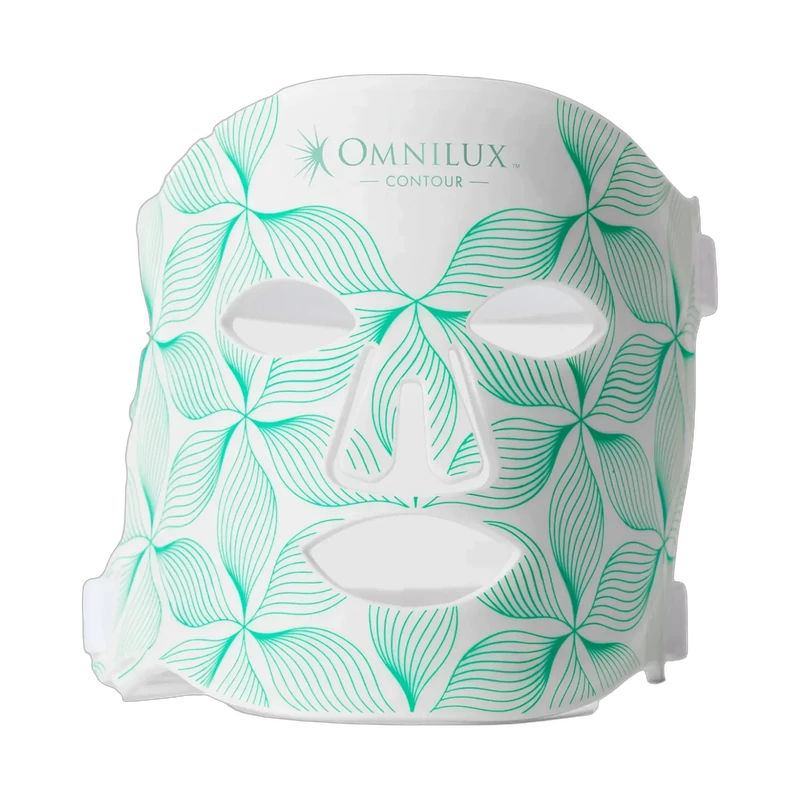
Omnilux
8.2/10 Celliara Score, Very Good
Cited here: FDA K191629 — Omnilux/faceLITE clearance summary; FDA/NLM GUDID — Omnilux Contour FACE TN19G
Read the review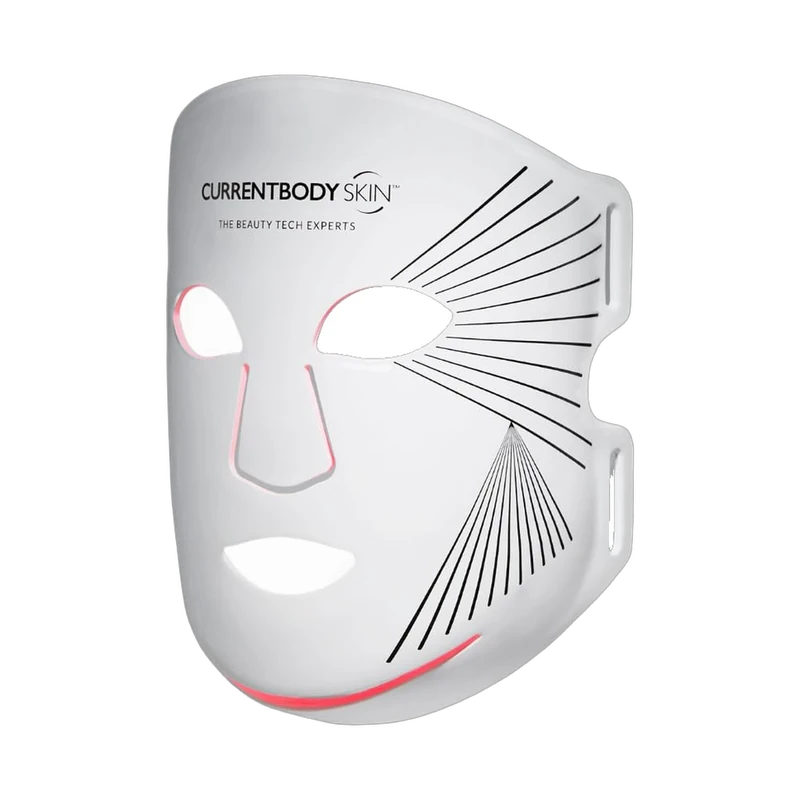
CurrentBody
CurrentBody Skin LED Light Therapy Face Mask Series 2
8.2/10 Celliara Score, Very Good
Cited here: FDA K250966 — CurrentBody Series 2 MK-90H
Read the review
Contraindications
Each manufacturer sets who should not use its mask and how to use it. Celliara’s reviews summarise the information available to Celliara, which may not include every exact-model restriction, so read the exact mask’s current instructions before you buy or use one.
- Light-sensitizing medications: Some medications can increase the skin’s sensitivity to light. Check the exact mask’s contraindications, and ask your prescriber or pharmacist whether a medication you take affects light sensitivity before you use LED therapy.
- Active or suspected skin cancer: Check the exact mask’s contraindications and talk to a healthcare professional before using any light device on or near a lesion.
- Lupus and other light-sensitive conditions: If you have a condition that makes you sensitive to light, check the exact mask’s contraindications and ask your clinician whether LED use is appropriate for you.
- Pregnancy: Guidance can vary by device, and the evidence base is limited. Check the contraindications for the exact mask you are considering and ask your healthcare professional if you are unsure whether LED use is appropriate during pregnancy.
- Eye protection for NIR-emitting devices: Eye-safety requirements vary by device design, output, wavelength, and labeling. Follow the exact manufacturer’s eye-protection instructions and do not assume that one rule applies to every NIR-emitting mask.
Frequently Asked Questions
What should I look for in an LED face mask?
Start with your goal, then compare exact-device wavelength, dose/output information, treatment time, fit, protocol, contraindications, warranty and product-specific evidence. More LEDs or wavelengths do not automatically mean a better mask; the best buy is the one with a credible complete protocol you can follow consistently.
How many minutes per session?
Follow the session time for the exact mask you’re buying. Many consumer masks use roughly 10–20 minute sessions, but longer is not automatically better and you should not try to compensate for unknown output by extending treatment on your own. Shorter sessions are valuable when they make the routine easier to stick with—provided the device was designed around that schedule.
Is an expensive LED mask worth it?
Sometimes yes, sometimes no — price does not reliably correlate with irradiance or therapeutic efficacy. Some premium-priced masks have published irradiance data, FDA clearance, and third-party verified specs that justify the investment. Some have premium pricing and premium marketing with no meaningful technical differentiation from mid-range options. The evaluation criteria above — irradiance, wavelengths, clearance status, fit — matter more than price. Spend time on those before spending money on the device.
What wavelength is best for anti-aging?
Red light in the low-600nm range and near-infrared light in the 800nm range are both widely used in anti-aging-focused photobiomodulation. You’ll often see 633nm + 830nm together, but there is no single wavelength number that makes a mask the automatic winner. For you, the better question is whether the exact device delivers a credible dose, fits well, has a routine you’ll follow and has evidence that actually applies to that product.
Sources
What this guide relies on, grouped by what kind of source it is. Interpretation in the article is Celliara's.
Published research
- Wunsch and Matuschka technology-level controlled trial PubMed (Photomedicine and Laser Surgery, 2014) Broadband and red polychromatic light sources; not a mask study.
Regulatory records
- FDA K191629 — Omnilux/faceLITE clearance summary U.S. FDA
- FDA/NLM GUDID — Omnilux Contour FACE TN19G FDA / National Library of Medicine
- FDA K250966 — CurrentBody Series 2 MK-90H U.S. FDA
Manufacturer documentation
- Omnilux official Contour FACE page Omnilux
- CurrentBody official Series 2 page CurrentBody
Where to go next
See current recommendations
Our ranked page names the masks we recommend and who each one suits.
- Best Overall Mito Red Light MitoGLOW(TM) LED Face Mask
- Best Value Omnilux Contour Face
- Best for Short Sessions Dr. Dennis Gross SpectraLite FaceWare Pro
- Best for Light + Vibration Therabody TheraFace Mask
Decide between two masks
Explore the category
What separates the masks Celliara has reviewed, with every review in one place.
LED face masks