A Celliara guide to RF devices
Does Radiofrequency Skin Tightening Work?
What Is Radiofrequency Skin Tightening?
Radiofrequency (RF) skin tightening is a non-invasive aesthetic treatment that uses electromagnetic energy to heat the deeper layers of skin. The goal is to stimulate collagen and elastin production, improving firmness and reducing the appearance of laxity over time. Originally confined to professional dermatology and medical aesthetics settings, RF technology has been adapted into at-home consumer devices that deliver lower-energy treatments through repeated use.
RF sits in a growing category of energy-based skin devices alongside microcurrent, LED light therapy, and ultrasound. Unlike microcurrent, which targets the underlying facial muscles, RF works primarily on the dermis — the structural collagen-rich layer beneath the epidermis. For a direct breakdown of how these technologies compare, see our guide on microcurrent vs. radiofrequency.
At-home RF devices are designed to be used as part of a consistent skincare routine rather than as single-session treatments. Understanding how the technology works — and what its limits are — is essential for calibrating realistic expectations.
How It Works
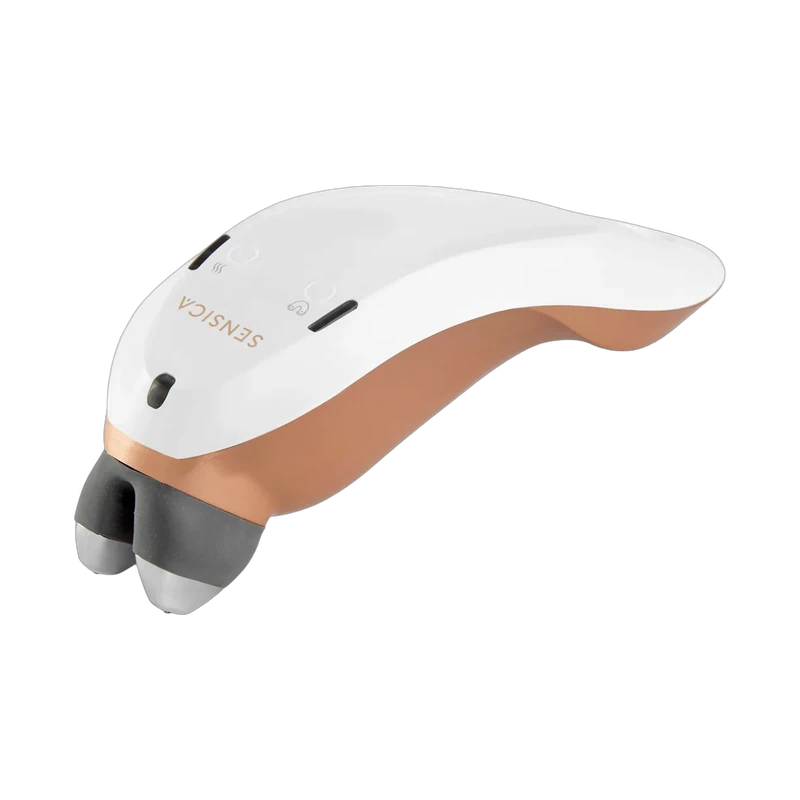
Radiofrequency devices emit energy in the megahertz range, which heats tissue according to its electrical properties. Clinical research describes collagen remodeling at controlled tissue temperatures in professional treatment. Home devices control temperature at the skin — Sensica’s switches RF off when skin temperature exceeds 40°C, and CurrentBody’s thermistors measure skin temperature — and do not publish the temperature reached in deeper tissue, so the clinical figures cannot be assumed for a home session.
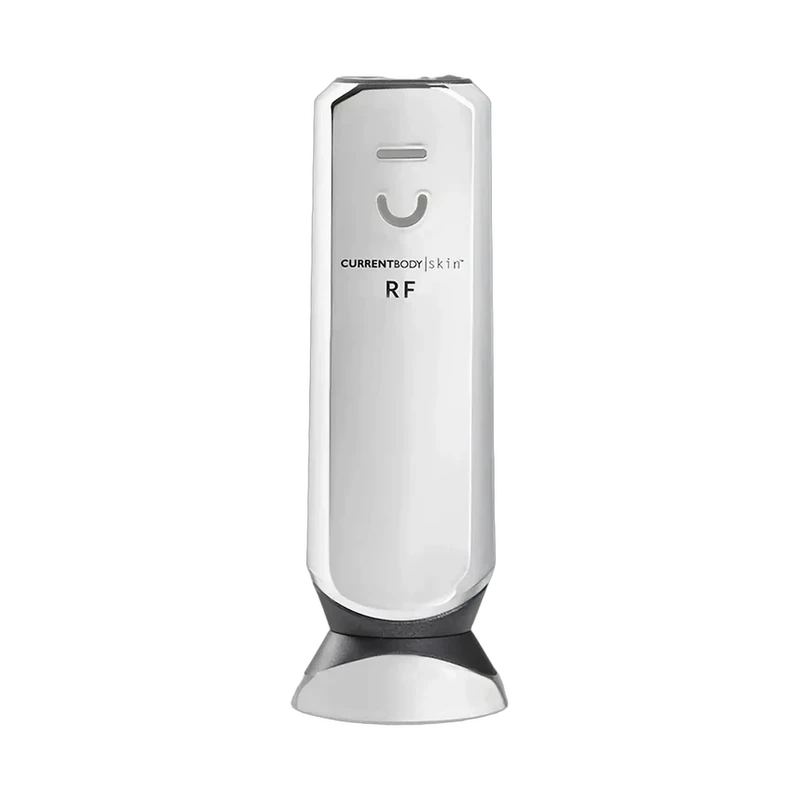
There are two primary RF delivery configurations: monopolar and bipolar. Monopolar RF uses a single active electrode and a separate grounding pad, driving energy deeper into the tissue — sometimes reaching the subcutaneous fat layer. Bipolar RF passes current between two electrodes positioned close together, producing shallower but more controlled heating. Many home devices use bipolar or multipolar designs — CurrentBody Skin RF, for example, uses 1 MHz bipolar RF through a four-electrode head — which heat a shallower path than monopolar RF.
In professional treatment, heating can contract existing collagen at the time of treatment, separately from the new collagen that forms over the following weeks. For home devices, what happens beneath the surface during and after a session is generally not measured, so that sequence cannot be assumed for a particular device.
Some at-home devices pair RF with complementary technologies — EMS (electrical muscle stimulation), infrared light, or sonic vibration — to address multiple layers of the face simultaneously. Each added mode needs its own evidence; a combination is not, by itself, evidence of added benefit.
What the Evidence Shows
Professional RF systems such as Thermage have a substantial clinical literature, including histological studies of collagen remodeling in treated tissue. That evidence describes professional systems; it does not transfer to home devices.
Evidence for home devices is limited and specific to each device:
- Sensica Sensilift: an exact-device study behind its FDA clearance found that 89–95% of 35 completers improved at least one wrinkle grade after eight weekly sessions, with the change still recorded three months later. It was manufacturer-sponsored, had no control group and covered adult women with Fitzpatrick I–IV skin.
- CurrentBody Skin RF: its FDA filing shows heating near-identical to a TriPollar system in a bench test; the outcome research was run on TriPollar technology, and CurrentBody does not publish results for this exact handset.
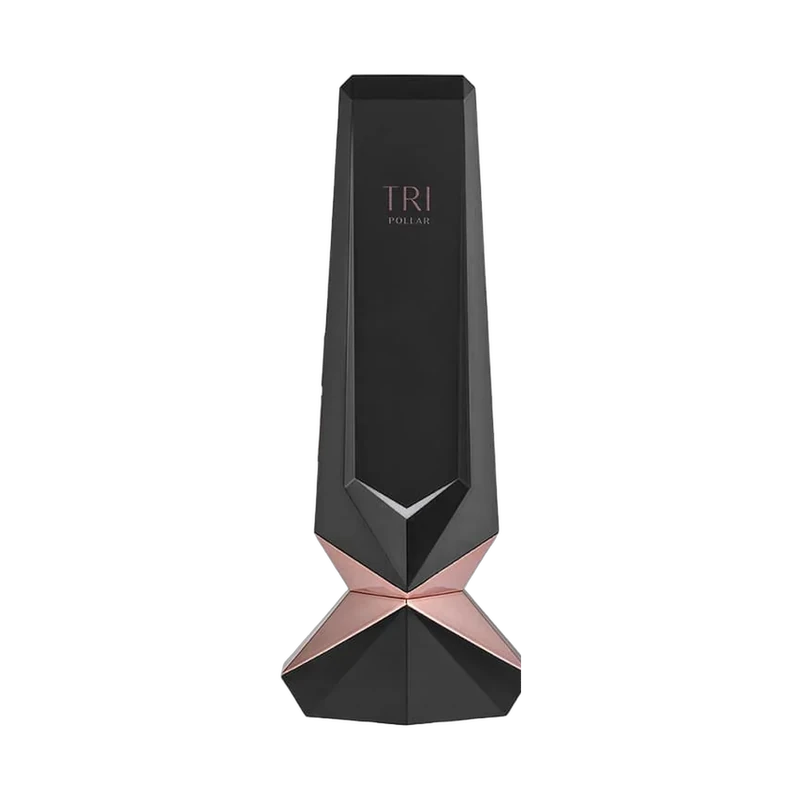
- TriPollar STOP Vx2: the research behind it used a physician-administered TriPollar system, not the STOP Vx2 itself.
- EvenSkyn Lumo+: Celliara’s current evidence record does not include a verified independent exact-model outcome study for the EvenSkyn Lumo+; EvenSkyn’s figures come from its own customer survey.
Each study’s results apply to the device or procedure studied, and to its population, setting, protocol and outcome measure: findings from professional procedures do not transfer automatically to home devices, and evidence for one device does not transfer to another.
The exact-device evidence covers mild-to-moderate facial wrinkles in the populations studied — Sensica’s clearance and study, for example, cover adult women with Fitzpatrick I–IV skin — so it does not show what happens outside those groups.
Whether combining RF with topical ingredients changes outcomes is not established in controlled studies. Professional RF has the larger evidence base; for home devices, the evidence is specific to each device.
Home RF devices named in this guide
Current facts and scores come from each device’s Celliara review.
What It Does NOT Do
Radiofrequency skin tightening does not replace surgical procedures. A facelift, brow lift, or deep-plane surgical correction addresses structural skin volume and repositioning in ways that thermal energy cannot. If significant excess skin volume is present, or if structural facial fat has redistributed due to aging, RF alone is unlikely to produce visible correction.
RF does not treat the surface of the skin. Hyperpigmentation, melasma, active acne, and post-inflammatory marks are not targets for RF technology. RF’s mechanism is thermal, subsurface, and structural — not photochemical or topical.
Findings from professional RF do not transfer automatically to home devices: professional systems run at far higher energy under trained practitioners, and the home devices in Celliara’s record are cleared or studied for mild-to-moderate facial wrinkles, not significant laxity.
What to Expect — Realistic Timeline
Exact-device evidence measures change after a course: Sensica’s study after eight weekly sessions, with the change still recorded three months later. Expect any change to be gradual and to build over the course; there is no general week by which a home device should show results.
Routines are set by each maker and differ widely: CurrentBody Skin RF runs once a week for eight weeks, then top-ups every four to eight weeks; Sensica Sensilift once a week for eight weeks, then less frequent maintenance; the TriPollar STOP Vx2 two to three sessions a week for six to eight weeks, then two to four a month; and EvenSkyn sets five-to-eight-minute Lumo+ sessions one to three times a week depending on age. Follow the exact device’s routine. Beyond what each study’s follow-up recorded, Celliara’s evidence record does not establish how long change lasts after you stop.
Photographs taken under consistent lighting conditions are the most reliable way to track progress. Subjective perception of change is often unreliable over long timescales because improvement is gradual. Side-by-side comparison photos at 4-week intervals provide an objective reference point.
Device Considerations
At-home RF devices vary significantly in electrode configuration, energy output, treatment area, and safety features. Bipolar devices are the most common consumer format and offer controlled, predictable heating. Multipolar devices distribute energy across more electrodes simultaneously, covering larger areas per pass. Some add cooling: EvenSkyn Lumo+, for example, uses active cooling.
Conductive gel is required for RF coupling. Using an RF device without the appropriate conductive medium causes energy to dissipate at the skin surface, increasing burn risk while reducing effective dermal penetration. Use only the gel recommended by the manufacturer. There is no head-to-head RF comparison yet; to compare the RF devices Celliara has reviewed, see the RF skin tightening hub and our ranking of the best RF skin tightening devices.
Follow the manufacturer’s guidance on intensity: devices differ in how many levels they offer — Sensica’s, for example, has three — and in how they say to choose one.
Treatment coverage consistency matters as much as intensity. Moving the device too quickly across the skin reduces effective dwell time and heating; moving too slowly risks surface overheating. Following device-specific glide patterns and timing guidance from the manufacturer is essential for both safety and efficacy.
Contraindications
Each manufacturer sets who should not use its device, so read the exact device’s current warnings before you buy or use one. Where a manufacturer says not to use its device, a clinician’s advice does not change that. Check the exact device’s warnings for pacemakers and other implanted electronic devices, metal or dental implants in the treatment area, pregnancy, keloid scarring, and active skin infections, open wounds or inflammatory flares at the treatment site. CurrentBody’s exclusions for Skin RF, for example, include pregnancy, retinoids taken in the past six months and recent fillers or peels.
Medication questions belong with your prescriber or pharmacist: check the exact device’s exclusions and ask about any medication you take. For a full overview of at-home device guides, visit the Celliara guides hub.
Where to go next
See current recommendations
Our ranked page names the devices we recommend and who each one suits.
- Best Overall CurrentBody Skin RF
- Best for Comfortable Sessions Sensica Sensilift
Explore the category
What separates the devices Celliara has reviewed, with every review in one place.
RF skin tightening