Best At-Home Anti-Aging Laser Devices of 2026

3 devices evaluated By Celliara Editorial Team, Device Research Team Updated May 2026 No paid rankings. Editorial policy →
✓ Independently reviewed FDA status verified

NIRA

$699.00

7.8 / 10
Celliara Score
★ Best Overall ✓ Editor's Pick
Our Top Pick

NIRA NIRA Pro 3 Laser

Best for full-face + neck — the most powerful standalone device

Why it wins

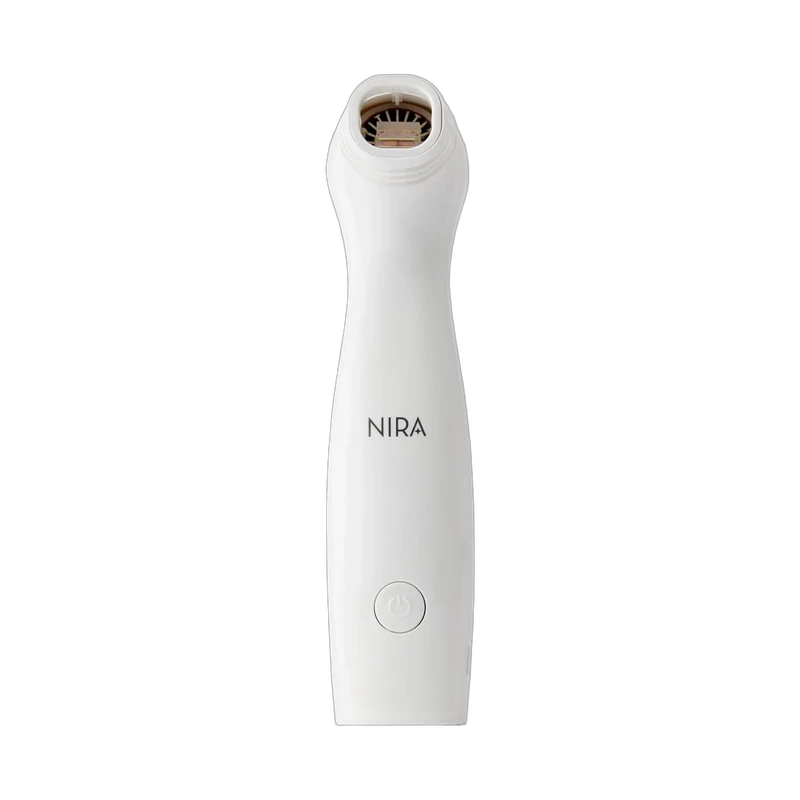
The Pro 3 is NIRA's primary device for anyone wanting to treat broad surface areas. 50% more powerful than its predecessor, with 9 precision power settings and a battery that handles 25 minutes per charge. Same FDA-cleared 1450nm technology as the Precision, built for efficiency across the full face, neck, chest, and backs of hands. If you have one device to buy and you want comprehensive anti-aging laser treatment, this is it.

Best overall NIRA device for anyone treating more than precision zones. Clinical trial data, biopsy-confirmed collagen formation, and 81% of users seeing sustained improvement post-use make this the strongest evidenced at-home laser available under $1,000. Adverse event risk is real — start at Level 1, do not rush to higher settings near the orbital area.

Check Price →

Free returns available if it’s not the right fit.


Best Overall

NIRA NIRA Pro 3 Laser — The Pro 3 is NIRA's primary device for anyone wanting

Best for Targeted Treatment

NIRA NIRA Precision Laser — The Precision has a small rounded dome tip designed specifically

Best Value Bundle

NIRA NIRA Pro 3 + Precision Bundle — The bundle pairs the Pro 3 (full-face coverage) with the


Other Top Anti-Aging Laser Devices Picks

#2 Best for Targeted Treatment

$449.99

7.8 / 10
Celliara Score

NIRA

NIRA Precision Laser

Best for: Best for crow's feet, under-eye, and lip lines — precision zones the Pro 3 can't reach

Why it wins

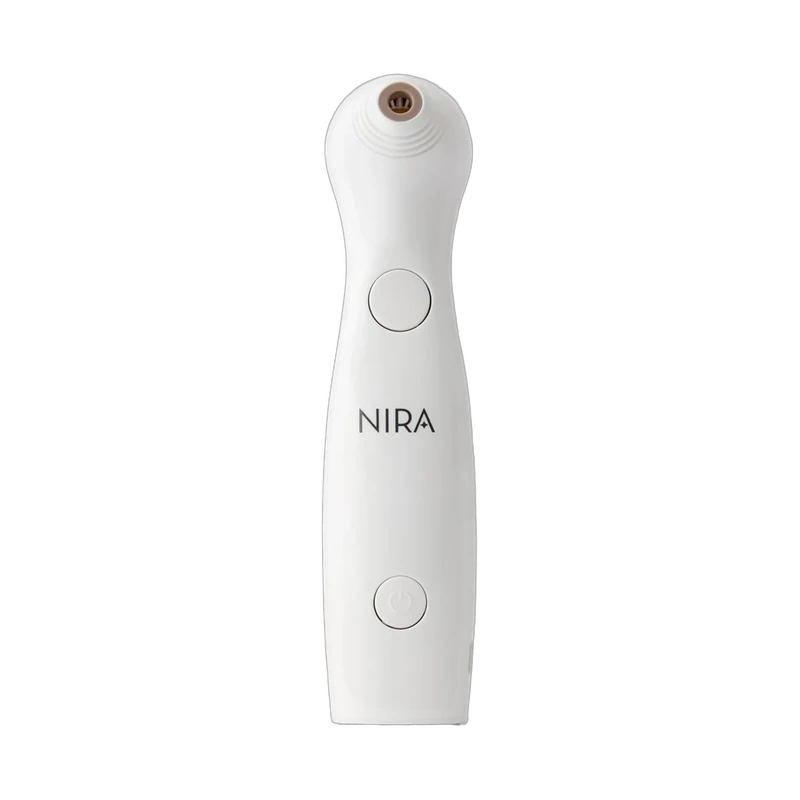
The Precision has a small rounded dome tip designed specifically for areas where most anti-aging concerns concentrate — crow's feet, under-eye wrinkles, lip lines, and marionette lines. These are zones where a larger treatment head loses accuracy. Same FDA-cleared 1450nm laser technology as the Pro 3, at $449.99. If the eye and mouth area is your primary concern, this is the more targeted and cost-effective choice.

The right device for precision-zone focused buyers. Tip geometry makes it genuinely superior for under-eye and lip line treatment where the Pro 3 tip is too large to maneuver. At $449.99 it is the lowest-cost entry point into FDA-cleared 1450nm laser technology.

Best for Targeted Treatment

Free returns available if it’s not the right fit.

#3 Best Value Bundle

$999.00

7.8 / 10
Celliara Score

NIRA

NIRA Pro 3 + Precision Bundle

Best for: Complete coverage — full face and precision zones in one purchase

Why it wins

The bundle pairs the Pro 3 (full-face coverage) with the Precision (targeted zones) for $999 — roughly the Pro 3 price plus ~$300 for the Precision, saving around $150 vs buying separately. If you want to treat the whole face including the eye and mouth area without compromise, this is the complete solution. No zone left uncovered.

Best for users who are fully committed to the NIRA protocol and want both coverage zones addressed from day one. The savings vs buying separately are modest but real. The two devices work as a system — Pro 3 for the broad pass, Precision for detail work after.

Best Value Bundle

Free returns available if it’s not the right fit.

Most readers choose NIRA NIRA Pro 3 Laser for overall results and ease of use.


Compare All Best At-Home Anti-Aging Laser Devices of 2026

Feature Best Overall NIRA Pro 3 NIRA Precision NIRA Bundle
Score 7.8 / 10 7.8 / 10 7.8 / 10
Price $699.00 $449.99 $999.00
Best For Full face + neck Crow's feet, eyes, lips Complete coverage
FDA
Warranty

Choose Based on Your Goal

Still deciding? Find yourself below.


Which One Is Worth the Price?

At-home anti-aging laser devices currently span $449–$999. The NIRA Precision ($449.99) is the entry point — a targeted precision device for the eye and mouth area. The NIRA Pro 3 ($699) handles full-face and neck coverage. The NIRA bundle ($999) provides both. Clinical alternatives using 1450nm technology cost $500–$2,000 per session. The at-home devices in this category represent a significant cost reduction for users who can commit to a consistent daily protocol.

Our Recommendation

If you’re unsure, start with the NIRA NIRA Pro 3 Laser — it offers the best balance of performance, usability, and long-term value.


Frequently Asked Questions

It depends on your treatment zones. If your primary concerns are crow's feet, under-eye lines, or lip lines — areas the Pro 3 tip is too large to reach accurately — buy the Precision ($449.99). If you want to treat the full face, forehead, cheeks, neck, or chest, buy the Pro 3 ($699). If you need both, the bundle ($999) saves roughly $150 vs buying separately.
The bundle makes sense if you genuinely need both coverage types and plan to use both devices consistently. At $999 vs ~$1,150 for separate purchases, the savings are real but modest. If you're unsure whether you'll commit to the protocol, start with the Pro 3 alone. You can add the Precision later.
True laser devices like NIRA use coherent 1450nm light to generate controlled thermal energy in the dermis, triggering collagen production via fibroblast activation. LED and LLLT devices use non-coherent light operating via photobiomodulation — a different mechanism. Most "at-home lasers" are actually LED devices. FDA-cleared true diode lasers for home use are a much smaller, more evidence-backed category.
Visible skin texture improvement typically appears at 4–6 weeks with consistent daily use. Structural wrinkle reduction — requiring collagen synthesis and remodeling — becomes measurable at 8–12 weeks. The clinical trial ran for 90 days with 2 minutes of daily use. 81% of participants saw improvement continue for 2+ months after stopping use.
No. NIRA devices are contraindicated for Fitzpatrick V–VI skin tones. The 1450nm laser interacts with dermal water to generate heat, but higher melanin concentrations in darker skin tones increase risk of thermal injury and hyperpigmentation. Fitzpatrick I–IV skin tones can use NIRA; Fitzpatrick IV users should start at the lowest setting.

Explore More


Reviewed by

Celliara Editorial Team

All device evaluations are based on clinical evidence and published research. Affiliate links are clearly disclosed. We do not accept payment for editorial coverage. Read our editorial policy →