Celliara comparison
NIRA Pro 3 Laser vs NIRA Precision Laser
Two 1450 nm lasers from the same NIRA line. The real decision is how much of your face you want to treat, and how much daily time you will give it.
Our answer
It depends on where your lines are.
Both are 1450 nm NIRA lasers with no gels or refills, and both clearances, like the one outcome study in Celliara's evidence record, cover wrinkles around the eyes. The difference is reach, and the daily time that reach costs.
For lines around the eyes, choose NIRA Precision: its small tip is built for exactly that area, in about two minutes a day. To work beyond the eyes too, choose NIRA Pro 3: a larger tip and nine comfort levels give more reach, but no outcome study in Celliara's evidence record covers those wider areas, and the routine gets much longer.
See the differences that decide it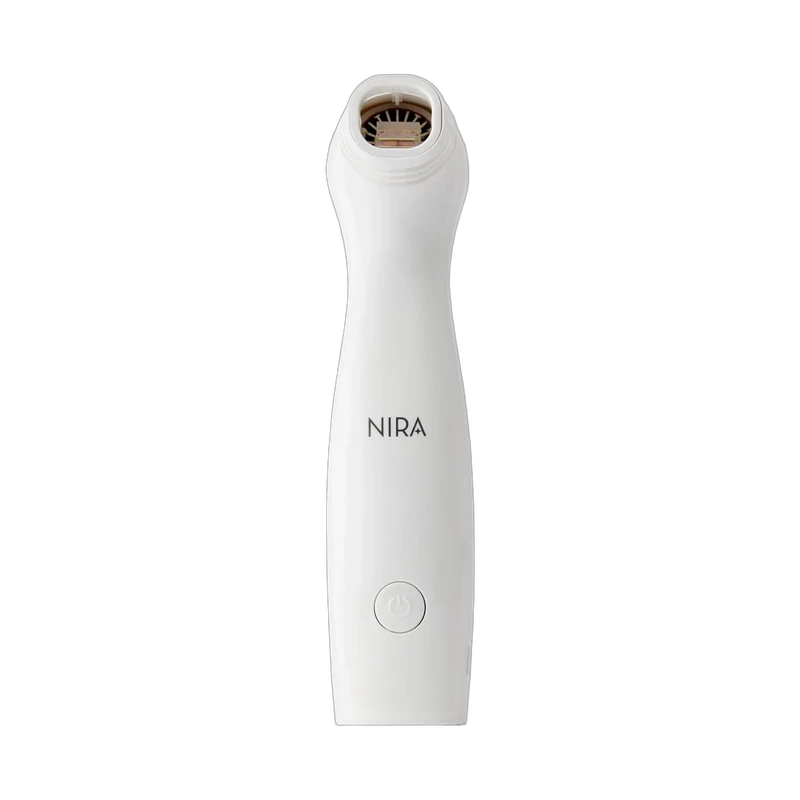
For the eyes and wider areas
NIRA Pro 3 Laser
Choose it to reach further: a tip NIRA describes as ten times the Precision's, with nine comfort levels.
8.0/10
$559.20
- Store
- NIRA on Amazon
- Returns
- Amazon return terms
- Checkout
- Amazon ↗
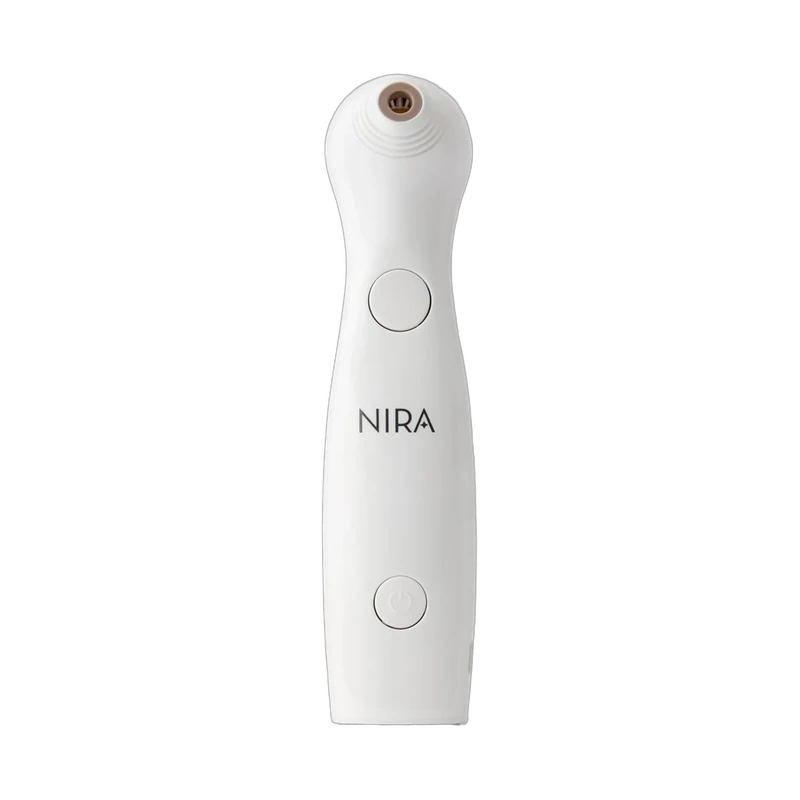
For the eye area
NIRA Precision Laser
Choose it for the eye area: a small tip and a two-minute, gel-free daily routine.
8.2/10
$449.00
- Store
- NIRA on Amazon
- Returns
- Amazon return terms
- Checkout
- Amazon ↗
Decide on these
The four differences that decide it
Each one can change which device you should buy. Read the product facts side by side, then what they mean for you.
Where you can treat
Pro 3A tip NIRA describes as ten times the Precision's. NIRA markets Pro 3 for the full face, neck, chest and backs of the hands.
PrecisionA small tip made to sit on crow's-foot lines and follow the under-eye curve. Across the forehead, cheeks or neck it becomes slow, placement-by-placement work.
What this means for you
If your lines are around the eyes, the Precision is made for exactly that job. If you want one laser for wider areas too, the Pro 3 is the one that can cover them in a practical session.
Who this favours The Precision for the eye area; the Pro 3 for wider areas.
What the evidence covers
Pro 3The clearance linked to Pro 3, K222685, covers wrinkles around the eyes. The one outcome study in Celliara's evidence record tested an earlier NIRA model around the eyes; that record holds no study of the wider areas NIRA markets it for.
PrecisionCleared under K163137 for wrinkles around the eyes, matching its purpose. Its outcome evidence is the same study of an earlier NIRA model, around the eyes.
What this means for you
Both rest on the same eye-area evidence: a median one-point wrinkle-scale gain over 28 weeks. The Precision is used where that evidence sits. With the Pro 3, results beyond the eyes are a possible bonus, not something Celliara's evidence record shows.
Who this favours The Precision, for being used where the evidence is.
Your daily time
Pro 3NIRA's headline is two minutes a day, up to twice daily; its how-to page also cites five. Covering the full marketed area takes far longer, by hand, spot by spot.
PrecisionAbout two minutes a day per NIRA, up to twice daily, with no gel. The eye area is quick to cover.
What this means for you
For the eyes alone, both fit a short daily slot. The Pro 3's extra reach only pays off if you will give it a much longer session every day, for months.
Who this favours Even for the eyes; the Pro 3 asks for far more time if you use its reach.
Levels and handling
Pro 3Nine comfort levels, starting at level 1, with contact firing and one-button level control. Whether the upper levels need the NIRA app is not confirmed.
PrecisionFive levels, starting at Level 1. It fires only when the tip is on the skin and you press the trigger.
What this means for you
More levels mean finer adjustment, but Celliara's records hold no NIRA output figure for any level on either laser, so the number of levels says nothing about strength. Check how the Pro 3's upper levels are unlocked before you rely on them.
Who this favours The Pro 3 for finer adjustment; the level count is not a measure of strength.
Looks decisive, but shouldn’t be
- A bigger tip, a bigger result?
- A larger tip covers more skin per placement. Celliara's evidence record does not show it producing a bigger result, so what the Pro 3 adds is reach and adjustment, not a larger effect.
- The score gap
- Pro 3 scores 8.0 and Precision 8.2. The gap comes from routine fit and value for money, where the Precision's short, focused routine scores higher. Results, capability, ownership and purchase confidence are level, so it is not a finding that the Precision works better.
Where they’re even
- The same laser wavelength
- Both are 1450 nm non-ablative diode lasers from NIRA, so the wavelength itself does not separate them.
- Nothing to keep buying
- Neither needs gels, cartridges or subscriptions: an alcohol wipe between uses and a weekly tip clean.
- The same purchase route
- Both links on this page check out at Amazon, where Amazon's return terms apply. NIRA states its 90-day refund and two-year warranty for NIRA-direct and authorized-seller orders; Celliara has not verified that either covers an Amazon order.
Match your priorities
Which fits what matters to you?
Find the priorities that sound like you. Where both devices do it, or neither does, we say so.
| If this matters most | Fits better | Why |
|---|---|---|
| Fine lines around my eyes | Precision | A small tip built for the eye area, where the evidence is. |
| Treating my face, neck, chest or hands too | Pro 3 | The larger tip NIRA markets for these areas, without outcome evidence for them. |
| A routine that stays short | Precision | Its job ends at the eyes; the Pro 3's extra reach means longer sessions. |
| Finer adjustment | Pro 3 | Nine comfort levels to five; Celliara's records hold no output figure for either. |
| A clearance that matches how I'll use it | Precision | K163137 covers the eye area it is built for; the Pro 3 is marketed beyond its eye-area clearance. |
| No gels or refills | Either | Neither needs any. |
| Evidence for areas beyond the eyes | Neither | Celliara's evidence record holds no outcome study of these areas for either laser. |
| NIRA's own refund and warranty through this page | Not verified | NIRA states them for NIRA-direct and authorized-seller orders. These links check out at Amazon, and Celliara has not verified that either covers an Amazon order. |
Understand the tradeoff
Why those differences matter
Treatment area decides it
Both lasers use the same 1450 nm wavelength, and both carry clearances for wrinkles around the eyes. The Precision's small tip is built for that area. The Pro 3 adds a tip NIRA describes as ten times larger and is sold for the full face, neck, chest and hands, which goes beyond its eye-area clearance and beyond the one outcome study in Celliara's evidence record.
What this means for you
Decide where you want to treat first. If it is the eyes, the Precision matches the job and the evidence. Buy the Pro 3 for its reach, and treat anything beyond the eyes as a possible bonus.
What the Pro 3 adds
Celliara's Pro 3 review puts it plainly: what the Pro 3 adds over the Precision is reach and adjustment, a larger tip and nine comfort levels to five, not a bigger result that Celliara's evidence record shows. Both are paid once, with no gels, cartridges or subscriptions afterwards.
What this means for you
Those additions matter only if you will use the reach. If your realistic routine stops at the eyes, the Precision covers the job both clearances describe. Weigh that against the two current prices on this page.
Expect a gradual change either way
The one outcome study in Celliara's evidence record, of an earlier NIRA model around the eyes, recorded a median one-point wrinkle-scale gain over 28 weeks, and not every subject improved. NIRA states that Pro 3 results can show in as little as 30 days, with excellent results at 90 days.
What this means for you
Plan for months of daily use with either laser, and note that a return window may close before you can judge the result.
After you buy
Living with each one
| Pro 3 | Precision | |
|---|---|---|
| Routine | 2 min headline (5 on NIRA's how-to page), up to twice daily; wider areas take far longer | About 2 min, up to twice daily |
| Before each session | Clean, dry skin; no gel or primer | Clean, dry skin; no gel or primer |
| Firing | On skin contact; one-button level control; silent vibration mode | Only on skin contact with a trigger press |
| Care | Alcohol wipe between uses; weekly tip clean | Alcohol wipe between uses; weekly tip swab |
| Charging | USB-C cable included; wall adapter and cases sold separately | USB-C cord and storage box included; wall adapter optional |
| Battery | Built in; up to 25 minutes per charge (retailer listing) | Built in; about 3 days of daily use per charge (NIRA) |
| Consumables | None | None |
What this means for you
Day to day, both are low-upkeep and gel-free. The difference is time: the Precision's job ends at the eyes, while the Pro 3 invites a much longer daily session if you use its reach. The battery figures come from different sources and units, so do not compare them directly.
Before you choose