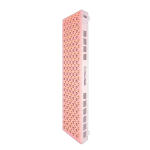
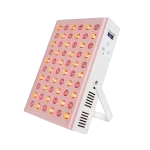
Professional Red Light Therapy Devices: What the Evidence Actually Says
The market for red light therapy devices has expanded rapidly, and so has the looseness of the language used to sell them. “Professional-grade” now appears on everything from $40 wands to $3,000 full-body panels, with little regulatory definition separating them. This guide cuts through that ambiguity — explaining the science behind photobiomodulation, what distinguishes a genuinely capable device from an underpowered one, and what the clinical literature actually supports before you spend serious money.
What Is a Professional Red Light Therapy Device?
Red light therapy (RLT) — more precisely called photobiomodulation (PBM) — is the therapeutic application of low-level red and near-infrared (NIR) light to stimulate biological processes at the cellular level. Devices in this category emit wavelengths primarily in two ranges:
- Red light (630–700 nm): Penetrates skin to approximately 1–2 mm, targeting superficial tissue, fibroblasts, and the epidermis
- Near-infrared light (800–1100 nm): Penetrates 3–5 cm into tissue, reaching muscle, fascia, and deeper structures
In clinical settings — dermatology offices, physical therapy clinics, sports medicine facilities — PBM devices are purpose-built, calibrated tools with documented irradiance outputs. The consumer market has borrowed the vocabulary of clinical practice without necessarily inheriting its standards. Understanding what “professional” should mean, rather than what marketers use it to mean, is the first step to making an informed purchase decision.
The defining technical characteristics of a genuinely capable device are irradiance (power output per unit area, measured in mW/cm²) and fluence (total energy delivered per unit area over a session, measured in J/cm²). Most published protocols that demonstrate measurable outcomes use fluences in the range of 1–10 J/cm² per session. A device that cannot deliver this at a practical treatment distance is unlikely to replicate those outcomes regardless of what it claims on the box.
How It Works: Physics, Biology, and Dosimetry
The Photochemical Mechanism
Red light therapy is not a heating treatment. It does not ablate tissue, generate friction, or work through thermal energy. It works photochemically — meaning photons at specific wavelengths are absorbed by biological molecules called chromophores, triggering downstream cellular responses.
The primary chromophore target is cytochrome c oxidase (CCO), an enzyme in Complex IV of the mitochondrial electron transport chain. When photons in the red and NIR range are absorbed by CCO, a well-characterized cascade follows:
- Increased ATP production — mitochondria generate more adenosine triphosphate, the cell’s primary energy currency, supporting repair and regeneration processes
- Reactive oxygen species (ROS) modulation — at low doses, ROS function as signaling molecules that promote tissue healing rather than causing oxidative damage
- Nitric oxide (NO) release — improves microcirculation and reduces local inflammation
- Upregulation of growth factors — including TGF-β1 and IGF-1, which stimulate fibroblast proliferation and collagen synthesis
This mechanism is not contested in the scientific literature. The photon absorption by CCO and the resulting mitochondrial activation are among the more replicated findings in photobiology. What varies in strength is the translation of this mechanism into specific, measurable clinical outcomes — and that is a distinction worth keeping in mind when reading device marketing.
Why Dosimetry Is Everything
Most consumer content on red light therapy ignores dosimetry almost entirely, which is where the real complexity lives. The biological response to photobiomodulation follows a dose-response curve — too little light produces no meaningful effect; too much can be counterproductive. The therapeutic window matters.
For practical purposes: a device positioned 6 inches from skin at 50 mW/cm² delivers 1 J/cm² in 20 seconds. A device at 10 mW/cm² takes nearly two minutes to deliver the same dose. Budget panels frequently operate in that lower range, meaning session times must be impractically long to accumulate meaningful fluence — or the dose never materializes at all.
When evaluating any device, request or verify the irradiance measurement at your intended treatment distance, not at zero centimeters from the panel. Many manufacturers advertise peak output measured directly at the LED surface — a figure that drops off significantly at realistic use distances of 6–24 inches.
Does It Work? What the Evidence Shows
The evidence base for photobiomodulation is substantial, though unevenly distributed across applications. Here is an honest assessment of where the science is strong and where it is not.
Skin Texture, Tone, and Collagen Density
A 2014 randomized controlled trial published in Photomedicine and Laser Surgery (Wunsch & Matuschka) found that subjects treated with 633 nm and 830 nm light demonstrated statistically significant improvements in skin complexion, collagen density measured by ultrasound, and reduction in fine lines compared to sham controls. This is one of the more methodologically sound studies in the consumer-relevant skin category.
Research suggests that consistent use over 8–12 weeks is associated with meaningful improvements in these parameters. Single-session treatments are unlikely to produce visible changes — the mechanism requires cumulative mitochondrial stimulation and sustained collagen remodeling, both of which take time.
Wound Healing and Tissue Repair
A systematic review in Lasers in Medical Science (Peplow et al., 2010) confirmed that PBM accelerates wound closure and tissue repair across both animal models and human trials, particularly at fluences of 1–4 J/cm². The clinical literature in this application area is among the most consistent in photobiomodulation research.
Pain and Inflammation
A 2009 meta-analysis published in The Lancet (Chow et al.) — covering 14 trials with 820 participants — found that low-level laser therapy significantly reduced neck pain compared to placebo. While this research used laser-based clinical devices rather than LED panels, the wavelength ranges overlap substantially with higher-powered consumer panels, and the mechanistic pathway is the same. Clinical literature indicates meaningful pain-reduction potential, particularly for musculoskeletal applications, though direct comparisons between laser and LED irradiance outputs complicate direct extrapolation.
Hair Follicle Stimulation
A 2014 RCT published in Lasers in Surgery and Medicine (Lanzafame et al.) found that 630 nm irradiation produced a statistically significant increase in hair count in subjects with androgenetic alopecia compared to sham treatment. Several FDA-cleared devices exist in this category, specifically for pattern hair loss, which represents one of the more regulated applications of consumer photobiomodulation.
Mitochondrial ATP Upregulation
Foundational work by Karu (2010), published in Photochemistry and Photobiology, established that mitochondrial CCO absorption of red and NIR photons produces measurable increases in intracellular ATP. This is among the most replicated findings in PBM research and forms the mechanistic backbone for the biological rationale across all applications.
What the Evidence Does Not Support
An honest guide has to address where the evidence is weak or missing. Several claims circulate widely in this market without adequate support:
- Fat loss and body contouring: Evidence for red light therapy as a standalone fat-reduction tool is limited, methodologically weak, and substantially industry-funded. Claims in this area should be treated skeptically.
- Dramatic single-session results: The photochemical mechanism is cumulative. Consumer marketing that implies visible transformation after one or a few sessions is not consistent with the research protocols that have demonstrated results.
- Equivalence across price points: Irradiance and fluence matter. An undertested budget device that cannot deliver adequate energy to target tissue at a real-world treatment distance cannot be expected to replicate outcomes from calibrated clinical research.
- Long-term safety at high power: Safety data for daily use of high-powered full-body panels beyond 12 months is not yet well-established in the literature. Eye protection during sessions is consistently recommended.
Who Should Consider a Professional-Grade Device
Higher-powered RLT panels make most practical sense for people who meet several criteria:
- Consistency of use: The research protocols that show results involve sessions 3–5 times per week over multiple weeks. A capable device is only an investment if you will actually use it on that schedule.
- Specific, evidence-supported goals: Skin rejuvenation over 8–12 weeks, support for musculoskeletal recovery, or hair follicle stimulation in pattern hair loss are the best-supported applications.
- Understanding of protocol: Knowing your target fluence, working at an appropriate distance, and tracking session times matters. This is not a passive wellness accessory — the dose-response relationship is real.
- Realistic expectations: Studies support meaningful improvements in specific parameters, not wholesale transformation. Buyers who understand this tend to have far more satisfying outcomes.
For more on how to approach device selection by use case, see our guide to red light therapy at home, which covers treatment distances, session protocols, and panel sizing in more detail.
Who Should Skip It — or Proceed with Caution
Red light therapy at appropriate doses has a strong safety profile in the published literature, but several groups should approach it carefully or consult a physician first:
- Photosensitivity conditions or medications: Certain medications (including some antibiotics and retinoids) and conditions like lupus increase light sensitivity. A dermatologist should advise before beginning PBM treatment.
- Active cancer or a history of cancer in the treatment area: Photobiomodulation stimulates cellular proliferation. This is desirable in healthy tissue repair; it is a reason for caution in oncology contexts. Current evidence does not definitively establish risk, but this warrants medical input.
- Pregnancy: There is insufficient research on photobiomodulation during pregnancy to make confident safety statements. Caution is appropriate.
- Budget-constrained buyers: An underpowered device used irregularly will not replicate the outcomes in the research literature and represents poor value. If budget is a constraint, understanding that a mid-range device used consistently will outperform an expensive one used occasionally is important framing.
How to Evaluate a Device Before You Buy
The gap between marketing language and actual capability is widest in this product category. A few concrete questions to ask before purchasing:
- What is the irradiance at 6 and 12 inches? Not at the surface — at realistic treatment distances. Any manufacturer who cannot or will not provide this number is a red flag.
- What wavelengths are emitted? Look for specific nm values, not just “red and near-infrared.” Dual-wavelength panels covering 630–660 nm and 830–850 nm are the most evidence-aligned configuration for skin and tissue applications.
- Is there independent third-party testing? Some manufacturers publish irradiance measurements from independent labs. Self-reported figures from manufacturers should be treated with more skepticism.
- What is the coverage area? Full-body panels require significantly more LED surface area than targeted spot devices. Matching the device size to your actual treatment goal matters for cost-effectiveness.
If you are also weighing red light therapy against other light-based skin treatments, our comparison of red light therapy vs. LED face masks breaks down the trade-offs in irradiance, convenience, and evidence by use case.
The Bottom Line
Red light therapy has a legitimate and well-characterized scientific foundation. The mechanism — photon absorption by mitochondrial cytochrome c oxidase triggering ATP production, nitric oxide release, and downstream tissue repair — is established in the photobiology literature. Clinical studies support meaningful outcomes in skin rejuvenation, wound healing, musculoskeletal pain, and hair follicle stimulation when devices deliver adequate fluence at appropriate wavelengths over consistent treatment periods.
What the evidence does not support is the casual equivalence of all devices that carry the word “professional,” or the expectation of rapid, dramatic results from an undertested product. Irradiance, fluence, wavelength accuracy, and treatment consistency are the variables that actually determine outcome — not the language on the packaging.
A thoughtful buyer in this category looks past marketing vocabulary, asks specific technical questions, and commits to the protocol that the research actually used. Approached that way, a capable red light therapy device is a considered investment with a reasonable evidence base. Approached otherwise, it is an expensive piece of equipment that sits unused after the first few weeks.
Panel size, wavelength combination, and verified irradiance are what separate clinical-tier performance from marketing claims.
Not all panels offer both red and near-infrared wavelengths, and treatment area coverage varies significantly across price tiers. Our comparison tools let you evaluate the specs that actually matter before committing.
Compare red light therapy panels →