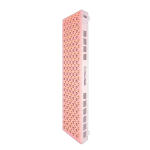
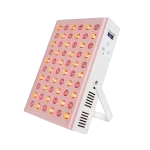
Red light therapy works. But the results you get depend as much on how you use the panel as on the panel itself. This is the complete accessory stack — what to use before, during, and after every session, and why each product earns its place.
If you’re using a red light therapy panel, this is the exact setup to follow. The best red light therapy panels deliver meaningful results — but only when the protocol around them is correct.
Why the Stack Matters as Much as the Panel
Photobiomodulation — the mechanism behind red light therapy — is a dose-response phenomenon. The photons that reach your cells drive the biological effects: mitochondrial activation, ATP synthesis, collagen stimulation, inflammation reduction. But that dose is governed by more than just the panel’s output wattage. Distance, session duration, and what happens immediately after treatment all determine whether you’re getting clinical results or just exposing yourself to expensive light.
Distance is the most commonly mismanaged variable. Irradiance follows an inverse-square law — double the distance from the panel and you quarter the power reaching your skin. At 6 inches you’re in the therapeutic window. At 24 inches you’ve reduced effective irradiance by roughly 94%. Most people set up their panel wherever is convenient. That’s why most people don’t get the results the research shows.
The post-session window is the second underutilised factor. Photobiomodulation transiently increases skin permeability in the minutes immediately following treatment — the same cellular activation that drives collagen synthesis also temporarily opens the skin to topical absorption. Apply the right active in that window and you’re compounding the effect. Miss it and you’re leaving a meaningful percentage of the protocol’s value on the table.
And then there’s eye safety. This isn’t a preference. The 660nm and 850nm wavelengths in full-spectrum red light panels penetrate ocular tissue — the photoreceptors in your retina do not regenerate after damage. If you understand how red light therapy works, you know the same mechanism that drives therapeutic benefit also requires protection when pointed directly at your eyes. Goggles are structural to this protocol, not supplementary.
Most people buy a panel and use it without the stack. This page covers what the stack is, why each product earns its place, and which specific products to use.
The Complete Stack
Three products. Three jobs. In sequence.
Step 1 — Before Every Session: Eye Protection
Super Sunnies EVO FLEX Tanning Bed Goggles (FDA Compliant)
~$12 · Applied before every session · Non-negotiable
What it is: A flexible, form-fitting goggle designed to block UV and high-intensity visible light. FDA compliant. Conforms to the face without gaps.
Why it matters: Red light therapy panels operating at 660nm and 850nm emit high-intensity light directly into a narrow viewing field. Unlike ambient room light, panel exposure is directional and concentrated. The photoreceptors in the retina — specifically the rods and cones — are susceptible to photochemical damage from sustained high-intensity exposure at these wavelengths. This damage is cumulative and irreversible. Standard sunglasses do not provide adequate protection from high-output LED panels; they reduce visible brightness but do not block the specific wavelengths at the intensities produced by therapeutic panels.
Which product: Super Sunnies EVO FLEX. FDA compliant, flexible enough to conform to varied face shapes without gaps, rated for UV and high-intensity visible light. Used widely in tanning beds — which produce substantially more UV than red light panels — making them more than adequate for red and near-infrared exposure. Cost: approximately $12.
How to use it: Put them on before activating the panel. Keep them on for the full session. Remove only after powering the panel down. This applies to every session, every time — there is no adaptation or acclimatisation that makes skipping this step safe.
What happens if you skip it: Cumulative photoreceptor damage. The effect is not immediate — which is precisely why it’s easy to dismiss. The retina does not signal pain during light exposure damage the way skin signals sunburn. By the time visual symptoms emerge, the damage is done. Skip the goggles for months and the question is not if damage occurs but how much.
Step 2 — Session Setup: Panel Stand
Red Light Therapy Panel Stand — Rolling, Adjustable Height, 360° Swivel
~$279 · Used every session if your panel has no built-in stand · Enables precise positioning
What it is: A mobile rolling stand with locking caster wheels, adjustable height, and 360° swivel capability. Designed to hold full-panel red light therapy devices at the correct treatment distance, angle, and height — hands-free.
Why it matters: Therapeutic irradiance requires the panel to be positioned at 6–12 inches from the treatment area. That’s not a guideline — it’s the zone where the inverse-square law keeps photon density in the range shown to produce measurable biological effects. Beyond 12 inches, irradiance drops sharply. At 24 inches, you’ve lost the majority of effective dose. Most people without a stand lean their panel against furniture, stack it on chairs, or hold it manually. All three approaches produce inconsistent distances, unsafe angles, and sessions that deliver a fraction of the intended dose.
A rolling stand solves this in two ways: it holds the panel at a fixed, measured distance from your body, and it lets you move between treatment areas — face, torso, back, legs — without repositioning the panel each time.
Who needs this: If your panel came without a built-in stand, you need this. The MitoMEGA 2.0, MitoMID 2.0, and MitoMIN 2.0 ship with stands or hanging hardware. The Hooga HG1000 and BestQool 170W also include stands. Check your panel’s documentation — if a stand was included, this accessory is optional.
How to use it: Set the stand height so the panel centre aligns with the primary treatment area (chest/abdominal for body sessions, face height for facial applications). Measure 6–8 inches from panel face to skin. Lock the caster wheels. Begin session.
What happens if you skip it: Variable distance = variable dose = inconsistent results. You’ll get some effect from sessions at inconsistent distances, but you won’t hit the dose ceiling the panel is capable of delivering, and you won’t be able to replicate effective sessions reliably.
Step 3 — After Every Session: Copper Peptide Serum (Skin Applications)
Red Light Therapy Peptide Activation Serum — Copper Peptide + Ectoin
~$16.99 · Applied immediately after skin-focused sessions · Skip for body pain and joint protocols
What it is: A post-session serum formulated specifically for the post-photobiomodulation absorption window. Active ingredients: copper peptides (GHK-Cu), ectoin (a natural extremolyte), multi-weight hyaluronic acid, and niacinamide.
Why it matters: Red light therapy transiently increases cell membrane permeability as part of its mechanism of action. This is the same biological pathway that enables the mitochondrial and collagen-synthesis effects — and it also temporarily makes the skin more receptive to topical actives. The post-session window lasts approximately 20–30 minutes. What you apply in that window penetrates differently than what you apply at any other point in your skincare routine.
Copper peptides are the correct active here. GHK-Cu functions as a cellular signalling molecule — it communicates with fibroblasts to support collagen and elastin synthesis, directly complementing what red light is doing at the cellular level. Ectoin provides membrane-stabilising protection post-treatment. Hyaluronic acid supports surface hydration during a period when the skin is temporarily more water-permeable.
How to use it: Power down the panel and remove goggles. Apply the serum immediately — within 2–3 minutes of session end. Apply to slightly damp skin if possible. Do not apply retinoids, AHAs, or BHAs in the same post-session window — enhanced permeability is bidirectional and can increase irritation from chemical exfoliants.
Who can skip this: If you’re using the panel exclusively for body pain, joint recovery, or muscle recovery — and not targeting skin — this product isn’t necessary. Skip it for non-skin protocols. For anyone using red light therapy for skin: collagen stimulation, anti-ageing, texture, tone — this step is part of the protocol.
What happens if you skip it: You still benefit from the session. You just don’t capitalise on the absorption window. The skin returns to baseline permeability within 30 minutes — after that, the serum behaves like any other topical application. You’re not losing the session results, but you are leaving incremental compounding benefit unrealised.
→ Red Light Therapy Peptide Activation Serum on Amazon (~$16.99)
Who Can Skip What
The stack is not one-size-fits-all. Here’s how to read it based on your protocol goal:
| Protocol Goal | Eye Protection | Panel Stand | Copper Peptide Serum |
|---|---|---|---|
| Skin — anti-ageing, collagen, texture | ✓ Required | ✓ Required (if no stand) | ✓ Required |
| Body pain, joint recovery, muscle | ✓ Required | ✓ Required (if no stand) | Skip — not applicable |
| Hair and scalp | ✓ Required | ✓ Required (if no stand) | Skip — use scalp serum instead |
On timers: The panels we’ve reviewed on Celliara — MitoMEGA 2.0, MitoMID 2.0, MitoMIN 2.0, Hooga HG1000, and BestQool 170W — all include built-in digital timers. If your panel has a timer, use it. If you’re running a different panel without one, a basic digital interval timer from Amazon (~$10–$15) is the add-on to get.
To choose the right panel for your protocol, see our guide on how to choose a red light therapy device.
Full Stack Cost
Eye protection: ~$12. Stand (if needed): ~$279. Serum: ~$16.99. Total accessory investment: $42–$115 depending on whether you need the stand.
A single red light therapy session at a medical spa runs $50–$150 per session. This stack supports unlimited at-home sessions for less than the cost of one or two clinic visits — and the protocol it enables is structurally equivalent to what clinics do.
Different panels require different protocol approaches
Power output, treatment distance, and session duration vary by device. Compare the top options to find one that matches your protocol goals.
Compare RLT Panels →FAQ
Do I really need eye protection every session?
Yes. No exceptions. The 660nm and 850nm wavelengths produced by therapeutic panels penetrate ocular tissue. The retina’s photoreceptors do not regenerate. Damage is cumulative and irreversible — and unlike UV skin damage, it doesn’t produce a pain signal during the exposure. The goggles cost $12. This is not a negotiable step.
What’s the right distance from the panel?
6–12 inches for most protocols. 6–8 inches for skin-focused sessions targeting collagen and anti-ageing effects. 10–12 inches for body-wide sessions covering larger surface areas. Beyond 12 inches, irradiance drops enough to meaningfully reduce dose. Don’t rely on a vague “close proximity” — measure it with a tape measure the first few sessions until you know what 6–8 inches looks like in your setup.
Can I use any serum after a session?
No. Avoid retinoids (retinol, tretinoin), AHAs (glycolic, lactic acid), and BHAs (salicylic acid) immediately post-session. The temporarily increased skin permeability can drive these actives deeper than intended, increasing the risk of irritation. Copper peptides, hyaluronic acid, and barrier-supporting ingredients (ceramides, ectoin) are the correct choices. Apply actives like retinoids either the morning after treatment or at least 30 minutes post-session once permeability has returned to baseline.
Do I need a stand if my panel already has one?
No. If your panel ships with a stand — or you’re using a door-hanging system — and you can position it at 6–12 inches comfortably, you don’t need a separate rolling stand. The stand is for panels that don’t include one, or for setups where consistent positioning is otherwise difficult.
How long should each session be?
10–20 minutes per treatment area is the standard range for home panels. The specific duration depends on your panel’s irradiance at the distance you’re using. Higher-output panels at close range hit therapeutic dose faster — a 1,000-LED panel at 6 inches may reach the same joule delivery in 10 minutes that a lower-output panel reaches in 20. Use the timer your panel provides and follow the manufacturer’s dosing protocol as a baseline.