
Red Light Therapy Panels
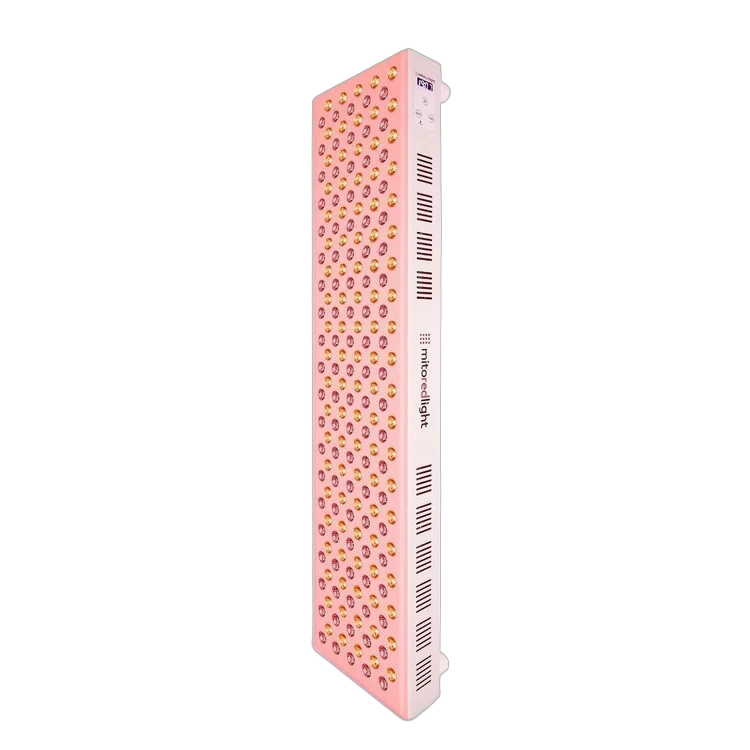
Best for: Full-body red light therapy at home
$1,049
8.1
/ 10
Celliara Score
Based on real-world usability, consistency requirements, and long-term value
✓ Independently reviewed
Updated April 2026
MitoMEGA 2.0 Review
Best for
Full-body red light therapy at home
Not ideal if
At 36×12 inches, storage and mounting require planning
The MitoMEGA 2.0 delivers serious full-body coverage at a price point that undercuts most competitors by hundreds of dollars
Check Price — $1,049 →View current pricing and availability before it changes
See how it compares before choosing →
LED Count
300 LEDs
Wavelengths
660nm + 850nm
Coverage Area
36 × 12 inches
Session Length
10–20 min/day
FDA Cleared
No — FDA registered
Warranty
3 years
Expert Verdict
8.1
/ 10
Celliara Score
The MitoMEGA 2.0 delivers serious full-body coverage at a price point that undercuts most competitors by hundreds of dollars. With 300 LEDs across a 36×12-inch panel, fan-cooled housing, and Mito's 3-year warranty, it is the most complete large-format panel in the sub-$600 range. Consistency is the only thing standing between you and results — use it.
Pros
- 300-LED array covers the entire torso in a single session
- Dual 660nm + 850nm wavelengths target both skin surface and deep tissue
- Fan-cooled housing prevents overheating during extended sessions
- Digital timer built in — no external timer needed
- 3-year warranty is industry-leading at this price point
- Solid construction with mounting hardware included
Cons
- At 36×12 inches, storage and mounting require planning
- Fan noise is noticeable in quiet environments
- No modular expansion — fixed panel size only
- Not FDA cleared for medical claims — registered only
Best for: Full-body red light therapy at home
Independent review. No paid placements.
Price verified April 2026
Is the MitoMEGA 2.0 Right for You?
Most people choose the wrong device because they don't understand how it fits their routine. This is the fastest way to find out.
Buy it if you...
- 300-LED array covers the entire torso in a single session
- Dual 660nm + 850nm wavelengths target both skin surface and deep tissue
- Fan-cooled housing prevents overheating during extended sessions
- Digital timer built in — no external timer needed
Skip it if you...
- At 36×12 inches, storage and mounting require planning
- Fan noise is noticeable in quiet environments
- No modular expansion — fixed panel size only
Compare first if you...
- Haven't decided between two specific devices
- Want to see how this performs against a cheaper option
- Are choosing based on one specific feature
Full Specifications
| Technology | |
| Modality | Red + Near-Infrared Light Therapy |
| Wavelengths | 660nm (red) + 850nm (near-infrared) |
| LED Count | 300 dual-chip LEDs |
| Cooling | Active fan cooling |
| Clearance | |
| FDA Status | FDA registered (not cleared) |
| Usage | |
| Session Length | 10–20 minutes |
| Frequency | 3–5 sessions per week |
| Treatment Areas | Full body — torso, back, legs, face |
| Design | |
| Panel Dimensions | 36 × 12 inches |
| Timer | Built-in digital timer |
| Mounting | Door mount / stand compatible |
| Support | |
| Warranty | 3 years |
Specs sourced from Mito Red Light
Feature Breakdown
300-LED Full-Body Array
The MitoMEGA 2.0's 300-LED array across a 36×12-inch surface is the defining feature of this panel. At this density, you can treat the full torso — front or back — in a single 10-15 minute session without repositioning. Most mid-market panels in the sub-$400 range require multiple sessions or panel stacking to achieve the same coverage.
The dual-chip design means each LED emits both 660nm and 850nm simultaneously. Red light at 660nm penetrates to approximately 1–2mm, targeting skin surface inflammation, collagen synthesis, and wound healing. Near-infrared at 850nm reaches 3–5cm, stimulating mitochondrial activity in muscle tissue and deeper connective structures.
For full-body use cases — muscle recovery, joint inflammation, systemic energy — the coverage mathematics matter more than raw irradiance spec-sheet numbers. The MitoMEGA 2.0 wins on coverage.
Best-in-class LED density for the price — full torso in one shot, no repositioning.
Fan Cooling and Build Quality
High-LED-density panels generate heat. The MitoMEGA 2.0's active fan cooling system keeps LED operating temperature stable during extended sessions — a detail that matters for both longevity and consistent irradiance output. LEDs that run hot degrade faster and deliver inconsistent photon output over time.
The fan is audible. In a quiet room you will hear it. It is not disruptive — closer to a laptop fan than a household appliance — but if you are treating in a shared space or want to use the time for meditation, factor that in.
Build quality is solid for the price. The housing feels substantial, the wiring is clean, and the mounting hardware is functional. This is not a $1,500 panel — there is no premium finish — but it does not feel flimsy either.
Active cooling is the right call at this LED count — extends panel life and maintains output consistency.
Clinical Evidence: What the Research Actually Shows
Red and near-infrared light therapy has one of the stronger evidence bases in the at-home device category. Published studies support: collagen synthesis stimulation (660nm), ATP production enhancement in mitochondria (850nm), reduction in delayed-onset muscle soreness (DOMS), and inflammatory marker reduction. The Hamblin lab at Harvard has published extensively on photobiomodulation mechanisms.
Where the evidence gets murkier is dose-response at consumer-grade irradiance levels. Clinical studies often use higher-power devices with precise irradiance controls. Consumer panels like the MitoMEGA 2.0 do not publish third-party irradiance verification data. Mito claims competitive output numbers but has not (as of April 2026) provided independent testing results.
That said, for recovery, skin, and general wellness applications, the evidence base for the wavelengths used is more robust than most at-home device categories. You are betting on a real mechanism — just at consumer, not clinical, intensity.
Strong mechanistic evidence for the wavelengths used — consumer-grade irradiance is the only meaningful caveat.
Total Cost of Ownership
The MitoMEGA 2.0 has an appealingly low total cost of ownership. At $599 upfront, there are zero consumables — no gels, no cartridges, no replacement parts required under normal use. The 3-year warranty covers manufacturing defects. LEDs rated for 50,000+ hours mean you are looking at over a decade of daily use before replacement is relevant.
Optional accessories: a door mount or freestanding floor stand ($40–$80 depending on brand) is worth buying if you do not want to hold the panel or prop it. Some users add protective eyewear ($15–$30) for near-infrared near-eye exposure, though the panel is not designed for direct face use at close range.
Annualized over 3 years: approximately $200/year, plus $30–$40 in accessories. For daily full-body sessions, that math is difficult to beat.
No consumables, 3-year warranty, 50k-hour LEDs — exceptional long-term value.
MitoMEGA 2.0
Best for: Full-body red light therapy at home
$1,049
We may earn a commission. This doesn't affect our editorial independence.
Real-World Performance
This is where expectations often break down for new users. What the device delivers in controlled conditions versus consistent home use are two different things.
⚠ This is where most people go wrong
Most people use the MitoMEGA 2.0 for two weeks, see partial results, and assume the panel is underpowered. The real issue is distance and consistency. Red light at 660nm drops off dramatically with distance — irradiance at 6 inches is 4× higher than at 12 inches. Most users stand too far back. Get within 6 inches for skin and surface applications, 12 inches for deeper tissue work.
The Protocol That Produces Results
A consistent 15-minute session at the right distance, 4× per week, will outperform 30-minute casual use 2× per week. Total weekly light exposure matters more than session duration alone.
Step 1 — Position and distance (1 min)
Mount the panel at torso height. Stand 6 inches from the panel surface for skin-layer applications (collagen, surface inflammation). Move to 12 inches for deeper tissue targets (muscle recovery, joint inflammation). Do not exceed 20 inches — irradiance at that distance is insufficient for meaningful photobiomodulation.
Step 2 — Session timing (10–20 min)
Set the built-in digital timer. 10 minutes at 6 inches front, then flip and treat the back if targeting full-body recovery. For skin applications only, 10 minutes front is sufficient. For muscle recovery post-workout, extend to 20 minutes per zone. Keep eyes closed or use protective eyewear during near-infrared exposure near the face.
Step 3 — Post-session stack (5 min)
Immediately post-session, skin is primed for absorption. Apply a Vitamin C serum or antioxidant treatment if targeting skin benefits — the light stimulus enhances collagen precursor activity and topical penetration is temporarily increased. For muscle recovery, hydrate and allow 30 minutes of rest before intense activity.
Supporting Products Worth Adding
4×
Minimum weekly session frequency to see measurable skin improvement in 8–12 week studies on red light therapy adherence.
Source: Photobiomodulation Research Review, 2022
Source: Photobiomodulation Research Review, 2022
Vitamin C Serum ($25–$60) — Applied immediately post-session, antioxidant serums compound the collagen synthesis stimulus. See our guide to post-treatment antioxidant serums →
Eye Protection ($15–$30) — For any near-face use, near-infrared rated goggles are worth having. Standard sunglasses are not sufficient for 850nm wavelengths.
Frequency Reality Check
Red light therapy is not a one-session-wonder. The photobiomodulation literature is consistent: effects are cumulative over weeks to months, not sessions. Users who see the best results treat at least 4× per week without long breaks. Understand how LED light therapy works before setting expectations. If you cannot commit to consistent use, the MitoMEGA 2.0 will sit on a shelf — which is a waste of $599 and a good panel.
For a complete session setup — eye protection, panel positioning, and post-session serums — see the Red Light Therapy Panel Protocol.
Without this protocol, most users won't see meaningful results.
Price & Value
$1,049
PremiumAt $1,049, the MitoMEGA 2.0 is a premium-tier investment in full-body red light therapy. It sits above most consumer panels on the market and competes with clinical-grade equipment. For buyers who are serious about full-body coverage and want a device that will last a decade without degradation, the price is justifiable — but budget alternatives like the BestQool 170W ($319) deliver solid results at a fraction of the cost for targeted use.
Premium pricing — justified for serious full-body red light therapy, but a significant investment.
Where to Buy
Amazon
$1,049
Prime eligible. Check for current pricing.
Alternatives to Consider
If this isn't the right fit, these are the closest alternatives worth considering.
If you want a smaller, more portable option
If you want the most budget-friendly entry point

Still deciding?
Comparing two specific devices is often the fastest path to a confident decision. We've done the side-by-side work for you.
Frequently Asked Questions
For skin surface applications (collagen, inflammation), stand 6 inches from the panel. For deeper tissue targets like muscle recovery, 6–12 inches is effective. Beyond 18–20 inches, irradiance drops significantly and results diminish.
10–20 minutes per zone is the standard protocol. 10 minutes at 6 inches delivers a meaningful dose for skin. For muscle recovery, extend to 15–20 minutes. Use the built-in digital timer — do not guess.
No. It is FDA registered as a general wellness device but not FDA cleared for any specific medical condition. This is standard for consumer-grade red light panels. It does not indicate the device is ineffective — just that it has not gone through the clearance process for specific clinical claims.
Yes, daily use is safe. Most protocols suggest 3–5 sessions per week for sustainable results. Daily use is not harmful and some users prefer it. The LEDs are rated for 50,000+ hours, so daily use over years does not significantly affect panel longevity.
The MitoMEGA 2.0 has 300 LEDs across a 36×12-inch panel — designed for full-body coverage in one position. The MitoMID 2.0 has 100 LEDs across a 19×9-inch panel, better suited for targeted zone treatment or desk/shelf placement. If full-body coverage is your goal, the MitoMEGA is the right choice despite the higher price.
Our Pick
MitoMEGA 2.0
Best for: Full-body red light therapy at home
Our Verdict
8.1
/ 10
The MitoMEGA 2.0 delivers serious full-body coverage at a price point that undercuts most competitors by hundreds of dollars. With 300 LEDs across a 36×12-inch panel, fan-cooled housing, and Mito's 3-year warranty, it is the most complete large-format panel in the sub-$600 range. Consistency is the only thing standing between you and results — use it.
Check current pricing and compare it against alternatives before deciding.
We may earn a commission if you purchase through our links. This does not affect our editorial scoring or recommendations.